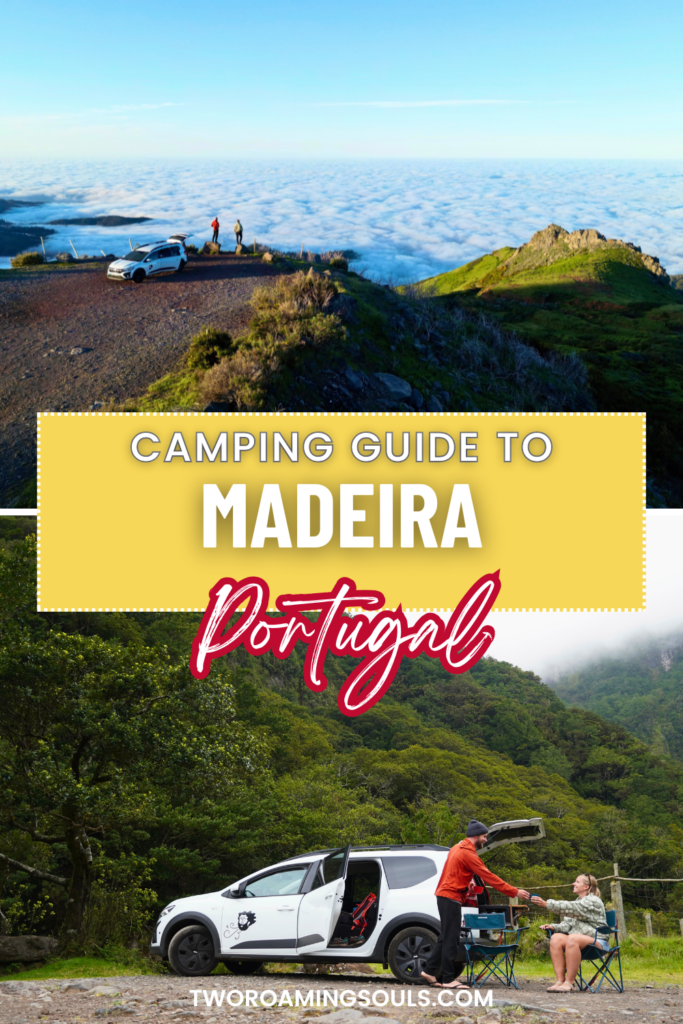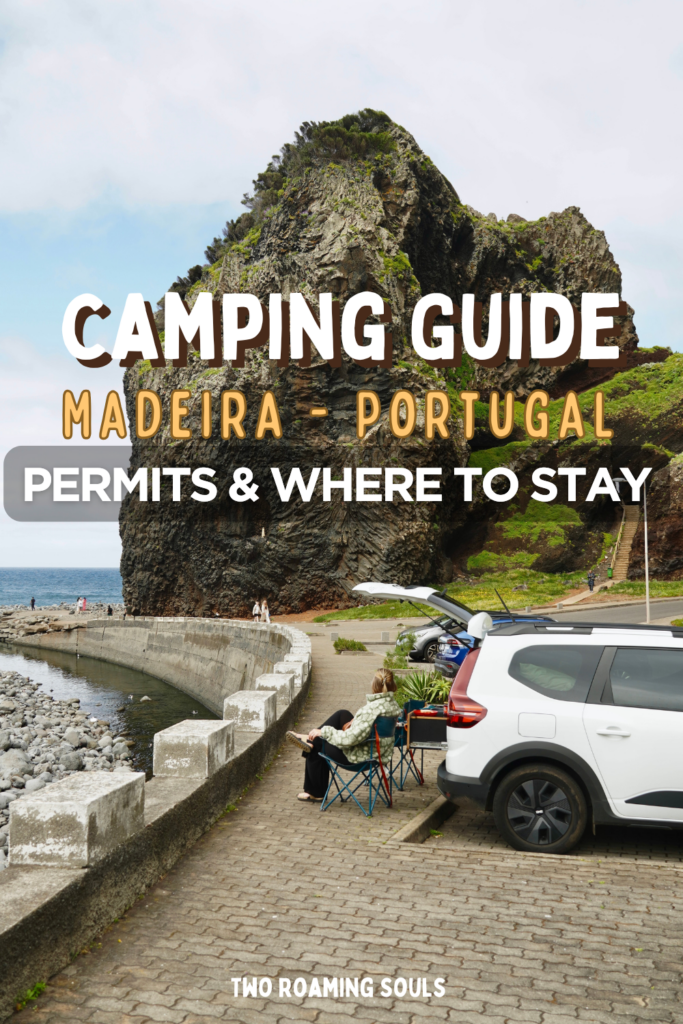
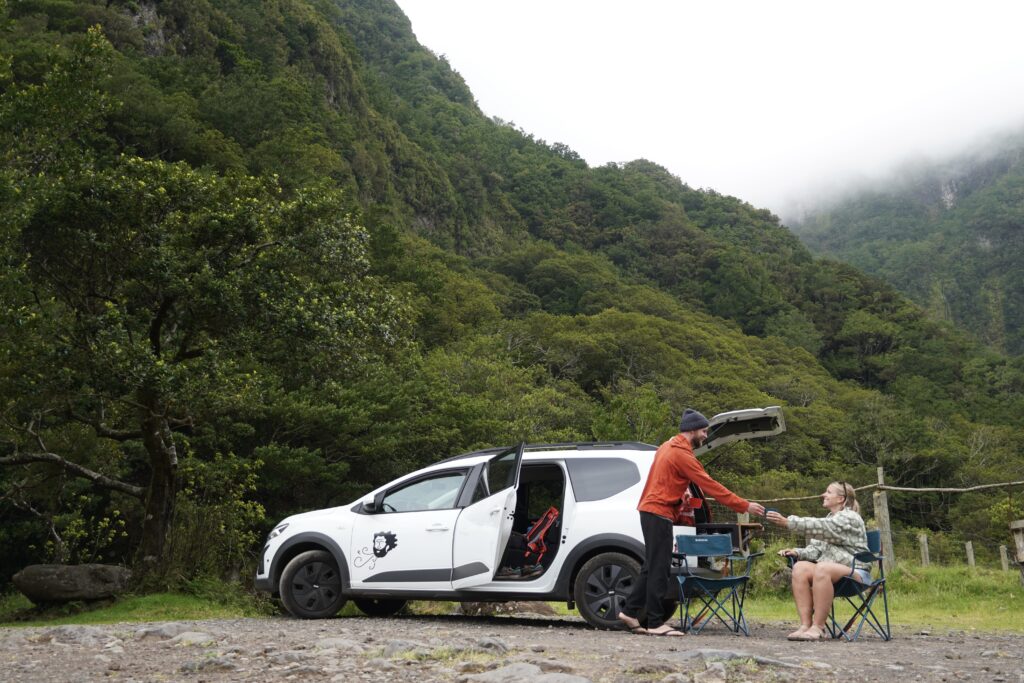
In this guide, we’re going to explain everything you need to know about camping in Madeira. This Portuguese island off the coast of northern Africa is a popular destination for outdoor lovers. Packed with dramatic coastlines, jaw-dropping hikes, dreamy waterfalls, and more.
We rented a car camping rig with Vanscape to explore this beautiful island. From beaches and coastal towns to hiking trails high in the mountains, we went all over this island.
In 2026, Madeira instituted a new Permit System for campsites and hiking trails. You must apply for permits on the Simplifica Website.
With this new permit system it definitely changes the equation for successfully doing a camping trip in Madeira. When planning our trip, we struggled to find good, up-to-date information about what it’s like. So we wanted to make this guide to help others considering a camping trip to Madeira, whether that’s in a vehicle or tent camping.
One thing you need to know is that basically all the campgrounds on the island are really geared towards tent camping. Unlike most of Europe, where you can find plenty of vehicle-oriented campgrounds for RVs, campervans, etc. Madeira has no vehicle camping infrastructure at all. Initially surprising to us, but it actually makes sense when you think about it.
Madeira’s roads are no place for an RV. It would be a nightmare trying to navigate the narrow roads and steep hills in a large vehicle. Even a larger campervan would be a pain to navigate around the island.
So consequently, RV and vehicle camping infrastructure has never really existed here, simply because there is not enough demand for it.
But that being said, there are still some people sleeping in smaller vehicles, though it seems mostly tourists renting vans and not full-timers.
And without vehicle camping infrastructure, vehicle campers are often tempted to camp outside of campgrounds. Staying the night in parking lots, trailheads, or just on the side of the road. Which is not technically allowed in Madeira, and doing so can get you a visit from the Police or Forest Police, depending on the jurisdiction.
But enforcement will always be a challenge across so much land, espeically when people show up late and leave early.
So, let get into the ultimate guide for camping in Madeira.
This post may contain affiliate links. Disclosure policy.
Renting With Vanscape
Back home in the United States, we’ve lived in our campervan off and on for about 7 years. And before that, we were taking camping trips, sleeping out of my old little sedan. So, all that is to say, vehicle camping is very familiar to us. We love how it provides freedom and a closeness to nature like nothing else can. And we are comfortable with the uncertainty that often accompanies it. So that’s why we were excited to explore Madeira this way.
We teamed up with the company Vanscape for our Maderia camping adventure to explore the island with their nimble car camping rig.
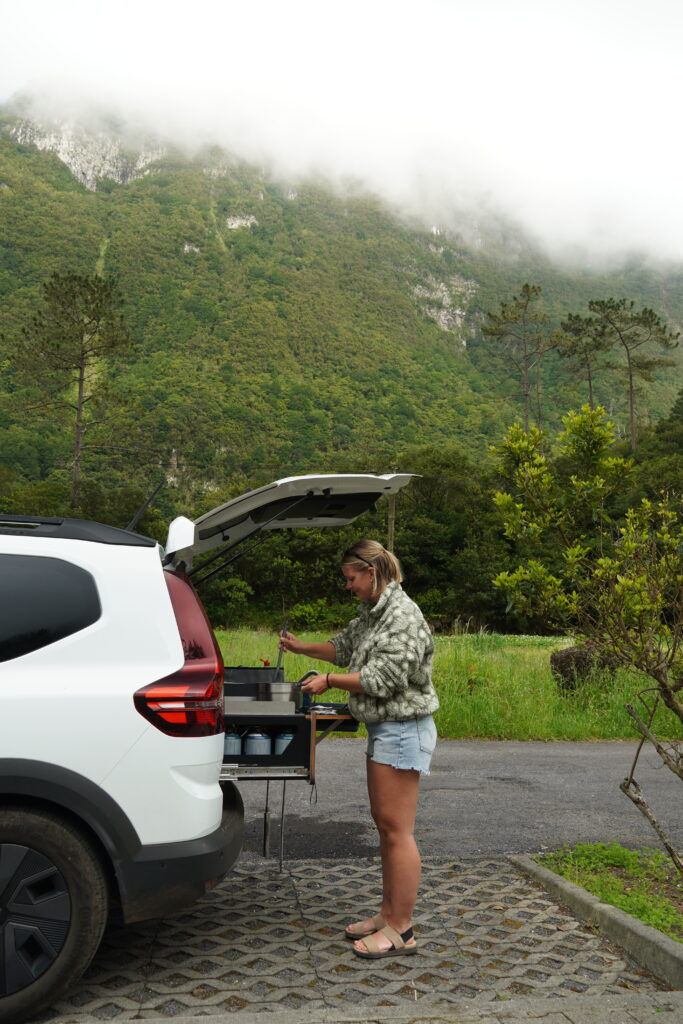
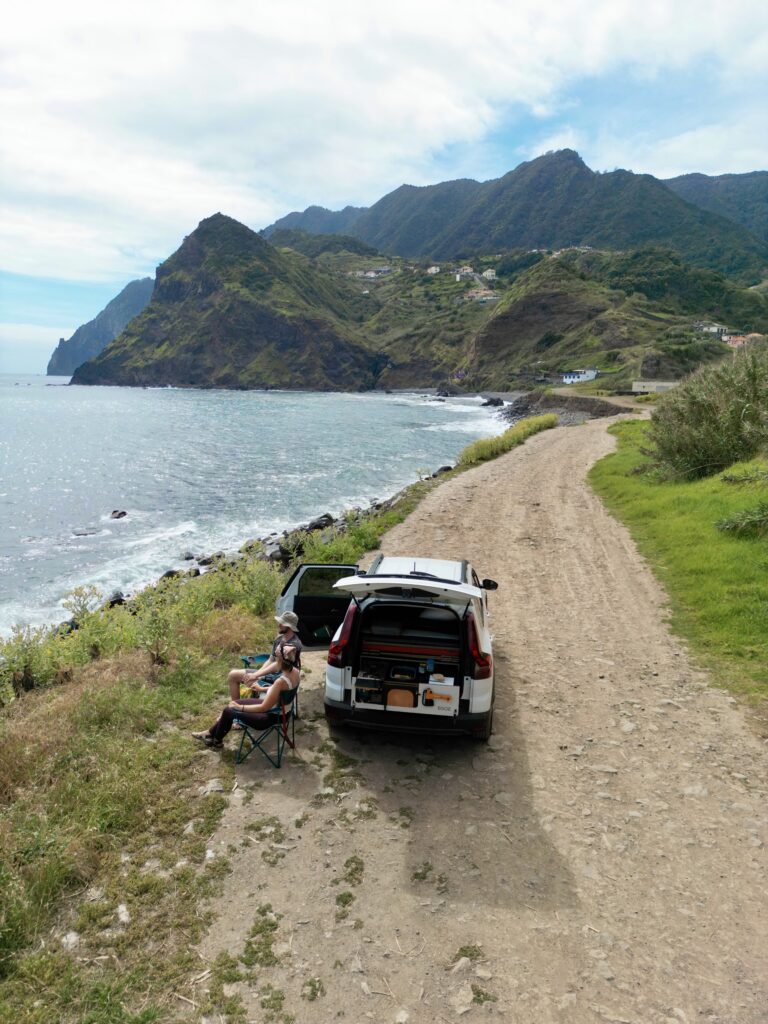
The car we got was a Dacia Jogger Hybrid. And this hatchback was the perfect size to navigate Madeira’s notoriously crazy roads, while still having enough room to sleep comfortably. And over 5 days driving all around the island, from sea level up to the mountains, back to sea level, and all over, we were thrilled that we only used a half tank of gas. So that was sweet!
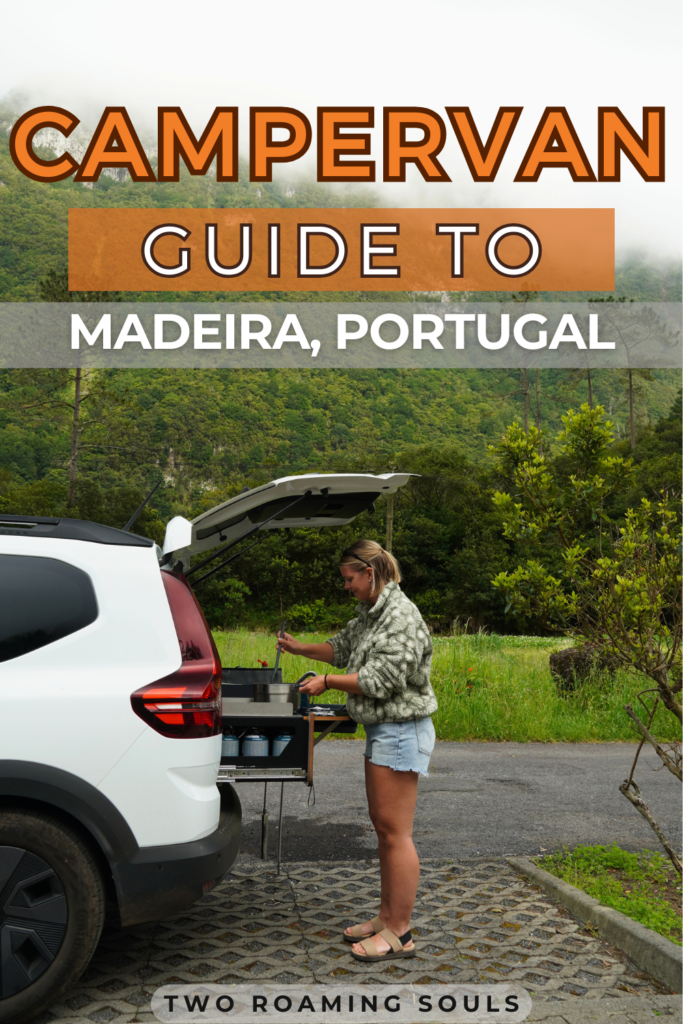
The car has a slide-in conversion kit that transforms into a bed and a kitchen that pulls out the back. The kitchen has a water jug, sink, stove, cutting board, and cooler. And they also provide a kit of kitchen supplies like pots and pans, plates, bowls, and utensils. This simple setup has all you need to cook meals at camp or really anywhere you’re parked.
But generally our advice is to keep it somewhat simple, or have some no-cook backups. The hatchback does provide some cover, but you could have a bad time cooking an elaborate meal if it really starts to rain. We made some basic meals like pasta, but also simpler stuff that’s quick and easy, like peanut butter and jelly or ramen noodles.
One thing this camper doesn’t have is a toilet, so you will still be relying on finding restrooms where you can.
The water pump also has a shower attachment for doing outdoor showers, which is really nice for cleaning up after a sweaty hike or a swim in the ocean.
After those long hikes where all you want to do is relax, this camper was perfect for that. It was like our own little mobile home-base to rest and refuel in between adventures. And camping out closer to the mountains allowed us to hit trails earlier, catch more magical sunsets, or just enjoy a spontaneous gem.
Weather In Madeira
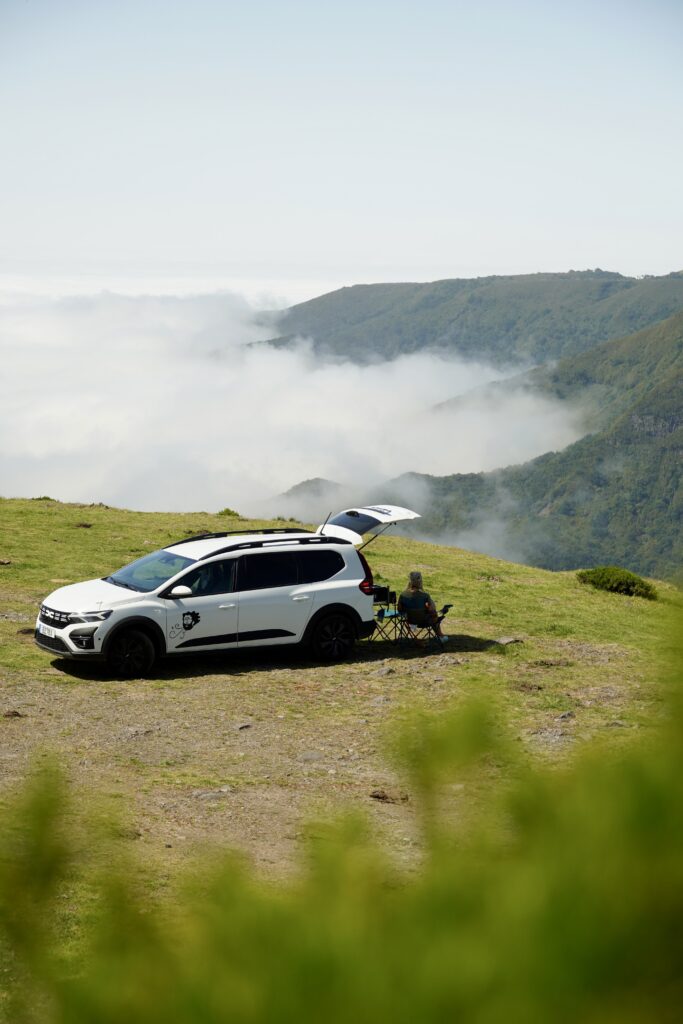
Something important to know about Madeira, especially when camping, is that it has very unpredictable weather. The steep mountainous terrain creates microclimates with fast-changing, isolated weather conditions. It might be sunny where you are, but cloudy and rainy just a few kilometers away.
And different elevations on the island often have dramatically different weather.
And lots of the campsites on the island are at higher elevations. So, you should expect cooler temperatures and a higher chance of clouds and rain.
In general, the weather is rainiest on the northwest side of the island, and least rainy towards the southeast. But some little pockets can defy this trend.
Weather apps are practically useless in Madeira for predicting cloud cover and rainfall. So maybe just to give you a general sense of temperature, but ultimately, live webcams are one of the best ways to actually see what the weather looks like in a specific place.
We liked to use the website Net Madeira to see what the current weather conditions for the places we wanted to visit for the day.
Obviously, when camping on the island, weather can seriously impact your experience, especially if you are in a tent. Nobody likes to pack up a tent in the rain.
And expect the mountains to be about 5-10 degrees Celsius colder than on the coast.
So we were happy to be in a car camper and somewhat more protected from the elements.
And one big benefit of being flexible in a car camping rig is that we could just follow the good weather. If the mountaintops were clear, we would head up there. Mountains in the clouds, we’d find a sunny town on the coast.
Permits and Campgrounds
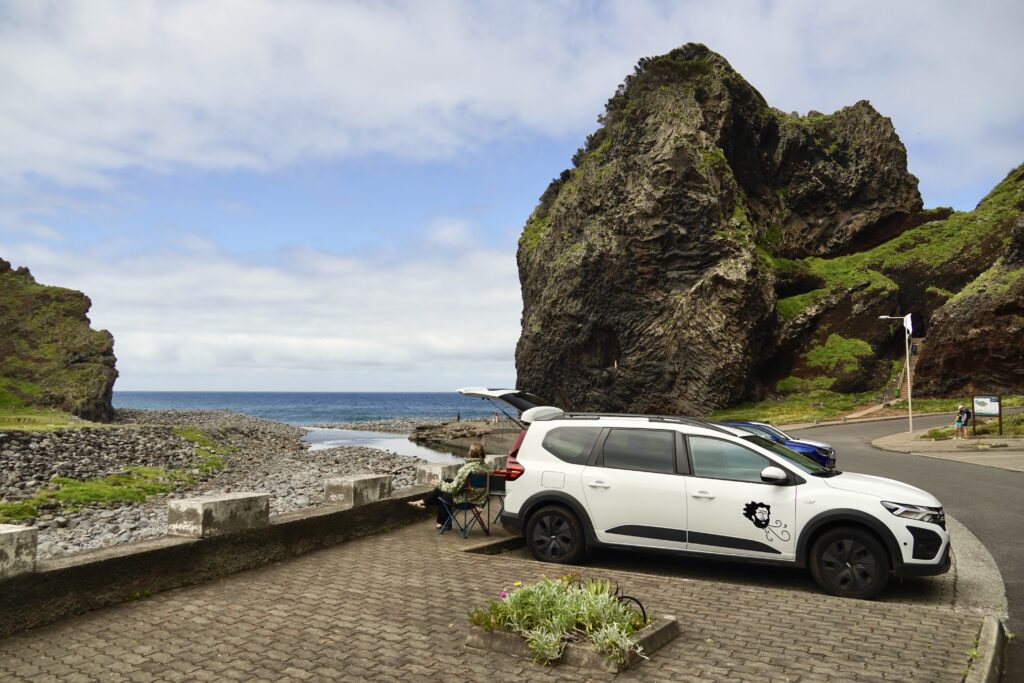
But one major roadblock to this flexibility is the new Simplifica Permit System for camping and hiking trails. Having to book trails and campsites in advance seriously takes away from the ability to be flexible and spontaneous.
As Madeira continues to grow in popularity, they’ve been experiencing some of the growing pains of overuse, like crowded trails, overflowing campgrounds, and environmental degradation.
So to help ease some of these problems, in 2026, Madeira instituted a timed-entry permit system for most of the hiking trails and government campgrounds on the island. This is all managed by the Institute of Forests and Nature Conservation, or IFNC. And permits are available online on the Simplifica website. And as of our visit in May 2026 it was still a relatively new system. And with that comes some issues.
Our experience using this new online permit system was anything but smooth. And I think frustration and lack of awareness has resulted in mixed results among visitors. With some people following the rules and plenty of others just risking a fine, or not even knowing there are permits. Since lots of older blogs, videos, and such don’t cover this new system.
We had trouble making an account, and then had payments charged to our card, then to later have permits canceled due to lack of payment. So this caused us lots of stress and frustration when attempting to play by the new rules.
And we noticed campgrounds that, according to the website, were fully booked, but then in-person in the evening it seemed unlikely that they would actually be full at night. A common problem of affordable camping permit systems is that people book sites just in case, but aren’t fully committed to actually showing up. Which prevents sites from actually being used by people who are there and want to use them.
Overall, permit systems are often a decent compromise for controlling crowding at popular destinations. And this system was designed with good intentions, but through a mix of limited information, poor implementation, and spotty enforcement, it falls well short of its intended goals.
Hopefully, by the time you visit, a lot of the issues will have been resolved, and the system works flawlessly to deliver uncrowded trails and campgrounds.
And you should plan to book permits ahead of time, especially for summer. Or book guided tours that include permits, because they will often handle transportation, permits, guiding, recommendations, and more.
Hiking trail permits are 4.50€, and campsite permits are 5€ per night. Luckily, this campsite fee is at least quite affordable.
But sadly, the flexibility to camp or hike wherever and whenever you want in Madeira is a thing of the past. And in a place famous for fast-changing weather, this flexibility was often key to experiencing places at the right moment.
This island is notorious for having microclimates that make the weather very unpredictable, especially up in the mountains. Weather apps are practically useless for Madeira. Maybe just to give you a general sense of temperature, but whenever out into the mountains in Madeira, plan for anything. High UV exposure, rain, wind, and intense temperature fluctuations. Things can and will change quickly, and you want to stay safe and comfortable no matter what the weather does.
Campground Options In Madeira
So when it comes to official campgrounds in Madeira, your options are staying at one of the government-run campgrounds or at private campgrounds.
The 21 government-run campgrounds, like we mentioned, are all designed for tent camping. And they range from some very basic facilities to barely any facilities at all.
Some of them are in the backcountry with on-foot access only, while others can be accessed with a car. Which allows some vehicle campers to sleep in vehicles in the parking area. But again, they are really not set up for this purpose. So you are really just kind of awkwardly in the parking lot rather than in the campground itself. But you can always use the picnic tables and camping areas instead of sitting in the parking lot next to the car.
Campsites are 5€ per night, or free for Madeira residents.
I would say that Madeira has a long way to go to make this system work well. Hopefully, they use this additional funding to add more staffing and facilities. And overall, just create a better end-to-end experience for users and support the conservation of these areas.
The website for booking has basically no information on these campsites, except for the names and location. Which makes it extremely difficult to plan a trip around them. And actually, 3 of them are missing entirely from the map. Plus, they have supposedly helpful info for setting up an account, but it’s all in Portuguese. So, not exactly helpful to a foreigner (english captions on the video at the very least).
It would be nice to have information about if there are toilets, drinking water, fire pits, backcountry or road access. Also critically important is elevation. It’s pretty dangerous to be having people book campsites and not even know if they’re going to be at sea level or 1500 meters. It gets cold up at elevation, and people could easily show up to what seems like a tropical island completely unprepared for how cold it gets at night.
Probably the best resource we did find, is this unofficial website, MadeiraCamping.com. But even their information was somewhat incomplete or not up to date.
So, overall the IFNC needs to do a much better job providing information so that people can be prepared. Better preparation helps people camp more responsibly.
They took the time to make these nice info boards at each campsite. But since you have to book in advance, these physical boards on-site do you no good when you are planning and preparing. Like finding out there is no drinking water available at the site, isn’t very helpful information to learn when you arrive. I wish they would make all this information available online to help people plan.
I submitted these ideas to the IFNC to help them improve the system. But in the meantime, I made this map of all the campsites, with any information I could find.
21 Government-Run Campgrounds
Here is a list of all the government-run campsites, and some additional information about each site. Facilities is subject to change.
Bica Da Cana: Car access, Toilets, Trash,
Boca Das Voltas: 4×4 access or 30-minute walk, water, no toilets
Caramujo – São Vicente: Backcountry, little info, along PR 17
Carreiras – Santa Cruz: Car access, no facilities
Casa Do Sardinha – Ponta De São Lourenço: Backcountry, right along super busy trail, NO PRIVACY, WINDY, no facilities
Chão Das Feiteiras – Machico: Car access, water, trash, no toilets, lots of sheep
Chão Do Pasto – Santo da Serra: Car access, no other info
Cruzes de Baixo: – Car access, no other info
Chão Dos Louros – São Vicente: Car access, toilets
Cruzinhas – Calheta: Car access, no other info
Estanquinhos – Canhas – Ponta do Sol: No info??, not even the exact location…
Estanquinhos – Fontes Ruivas: Backcountry, no toilets, no water
Fanal – Porto Moniz: Car access, toilets, drinking water
Fonte do Bispo – Calheta: toilets, drinking water
Pico Ruivo: Backcountry, No toilets, no water, HIGH ELEVATION,
Pico Das Pedras – Santana: Car access, toilets, drinking water
Poiso – Santa Cruz: Car access, trash, EARLY CAR TRAFFIC ON WAY TO AREEIRO SUNRISE
Porto Moniz: Temporarily closed, Car access, bathrooms, drinking water, trash
Ribeira do Alecrim: Car access, no toilets, no water (stream though), no Trash
Riberio Frio – Santana: backcountry, no toilets, no water, parking in Estacionamento do Ribeiro Frio Parking area, but no direct car access
Terreiros – Santa Cruz: Car access, no toilets, no water, trash
From our personal experience and research, here are the ones we think are best for vehicle camping.
Best campgrounds for car camping:
- GREEN – (best options for car camping)
- YELLOW – (okay spots for car camping)
- RED – (last resort options or 4×4 needed)
Private Campsites in Madeira
So this whole time we’ve been talking about government-run campsites. But there are also a small number of private campsites around the island that you can book.
Again, from our research, these are mostly designed for tent camping and not vehicles like camper vans and car campers.
So, here’s a list of all the private campsites we found on the island.
Gaya Camping: Tent only, very limited parking, message owner on WhatsApp to book
Paradise Camping Madeira: Campervans & Tents allowed, found on hip camp, wasn’t open when we visited, can book in advance
Arco Village – Farm & Campsite: Tent only, can book in advance
Honestly, it seems to me that there is unmet demand for more private campgrounds on the island.
Glamping Options in Madeira
Or there are some glamping-type spots with domes, yurts, etc. Which is essentially closer to traditional accommodation.
Here are some good glamping options to consider in Madeira.
- Rural Stay Porto Moniz – Domes by Teleferico Das Achadas da Cruz
- The Tiny Black Bird
- Canto das Fontes – Madeira Island Glamping
- Granny’s Farm apartments & camping
Park 4 Night App For Finding Campsites In Madeira
Lastly, I want to mention the Park4Night app. It can be a helpful resource for finding more unofficial camping spots around the island. It’s a community-driven app where other travelers leave pin drops and reviews of places they’ve stayed or visited.
That said, it’s important to know that while Park4Night was a great way to find overnight spots before Madeira introduced its camping permit system, many of those locations are now no longer “legal” places to camp. So if you’re using the app, be sure to follow the current local regulations.
Even if you aren’t looking for a place to spend the night, we still found it useful for discovering scenic pull-offs and quiet places to relax during the day and take in some incredible views.
Camping Etiquette
We observed evidence of lots of bad behavior in our time in Madeira. Trash, toilet paper, human feces, and more, sadly, all over the place. Now, I know this isn’t just from campers; plenty of other visitors contribute to this problem too. But campers have an added responsibility to be good to the earth.
In the US, we call them the Leave No Trace principles, which originally are designed for backcountry camping. But the guidelines can apply to any kind of camping or really just good guiding principles for anywhere you travel.
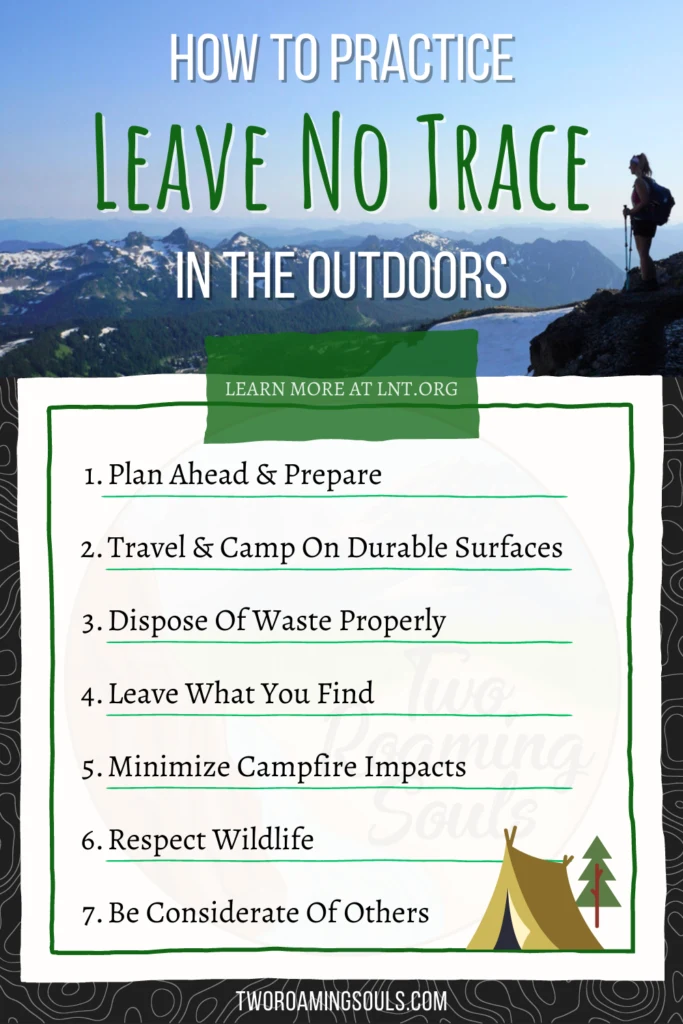
Here are the 7 principles of Leave No Trace that everyone should know and follow.
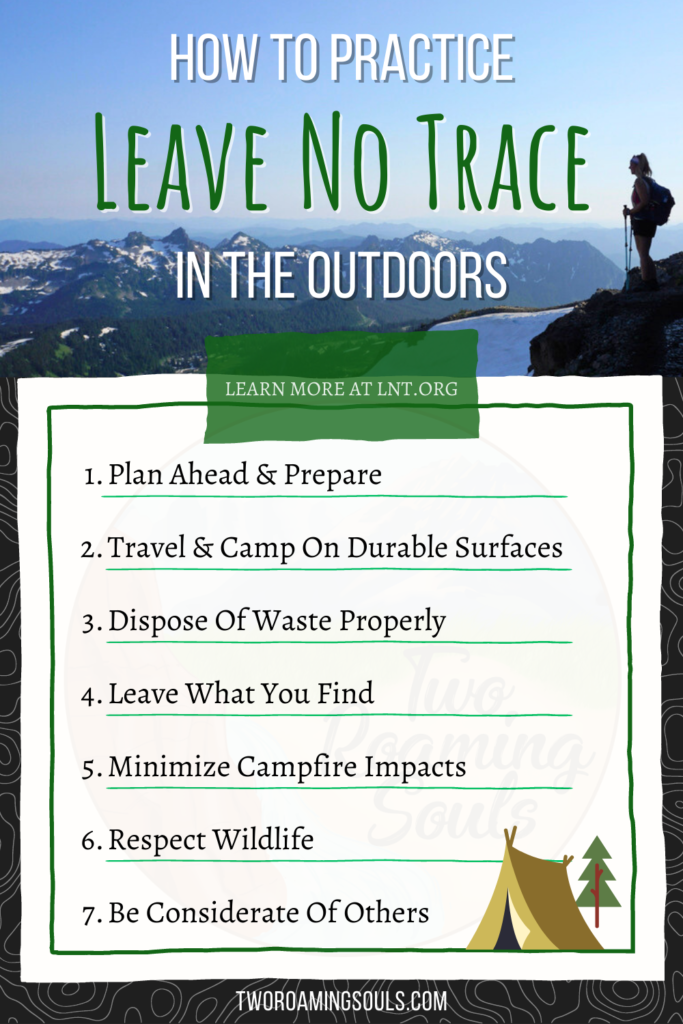
But we’d like to highlight some that are especially relevant to Madeira.
The most uncomfortable topic is how to go to the bathroom. And I think people being afraid to talk about it or ask questions is how it becomes a problem. And too many people take the attitude of “I’m just one person, what’s the big deal?” But when you multiply that attitude by thousands of visitors, you can see how it quickly becomes a problem.
For starters, do whatever you can to not go #2 out in nature. It’s always best to find real toilets when you can. Not all campsites or trailheads have them. So pay attention to where the nearest restrooms are, and try to use those when you can.
For us sometimes that meant buying something from a market, cafe, or restaurant, really just so we could use their bathroom.
But anyone out camping and hiking around Madeira should be prepared to responsibly go to the bathroom outside when no other options exist.
We recommend keeping toilet paper, trash bags, and hand sanitizer on hand for these inevitable times.
We like to have one ziplock bag with fresh TP and then have another for our used TP. This is where a lot of people go wrong. We saw tons of used TP and body wipes left behind near trails and campsites all over Madeira.
Please, please, please don’t leave your used TP just on the ground. Pack it out with you.
Or if you have to go #2 out in nature, the leave no trace etiquette is to dig a hole about 15cm (6 inches) deep and bury your waste. And ideally, you still pack out your used TP. But any version of this is better than just being left on the ground.
And you should only have campfires in designated fire sites at campgrounds. Only have a fire if you have enough water to put it out completely. Wildfires are a BIG risk in Madeira, and one was even responsible for shutting down the famous Peak to Peak hike for several years.
And make sure you pack out all trash from trails and campsites. This is one area where Madeira impressed us. There are lots of trash and recycling bins all over. So there’s really no excuse not to dispose of your waste properly.
Camping Rental Companies In Madeira
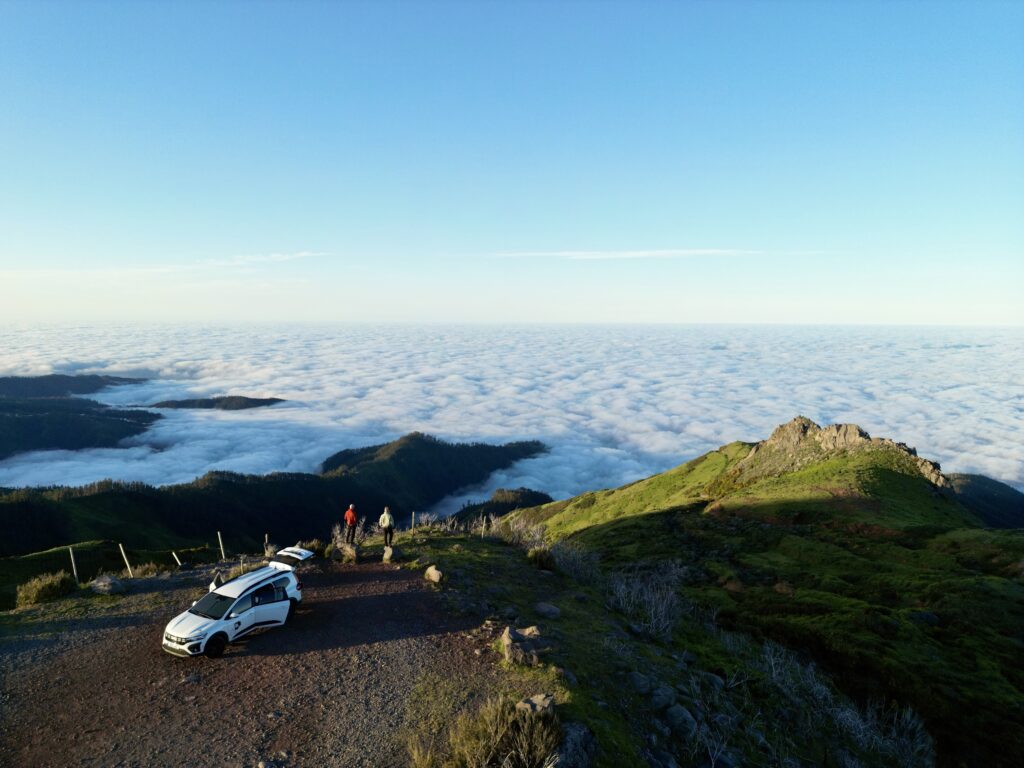
Here’s a quick rundown of camping rental companies. Which offers a range of things, like camping equipment (tents, etc.), micro car campers, and small and large campervans.
- Vanscape – Small and affordable car camping hatchbacks, rental cars
- MadeiraCampers.com – Large campervans, and camping equipment (tents, sleeping bags, etc)
- Madeira-Campers.com – Camping equipment (tents, sleeping bags, etc)
- Madeira.rentals – Camping equipment, campervans, and more
- MadeiraCampers.pt – Camping equipment (tents, sleeping bags, etc)
- MadRoadTrip.com – Small campervans
- 44campers.com – 4×4 Offroad rooftop-tent campers
- Yescapa.co – Peer-to-peer campervan rentals
We rented from Vanscape, so that’s the only one we can personally comment on. And we really appreciated that their hatchback was small enough to easily navigate Madeira’s crazy roads, and also doesn’t draw as much attention as a campervan.
There are some companies that rent bigger campervans, but again. I’m not sure driving anything larger than a small van would be comfortable.
Do We Recommend Camping in Madeira?
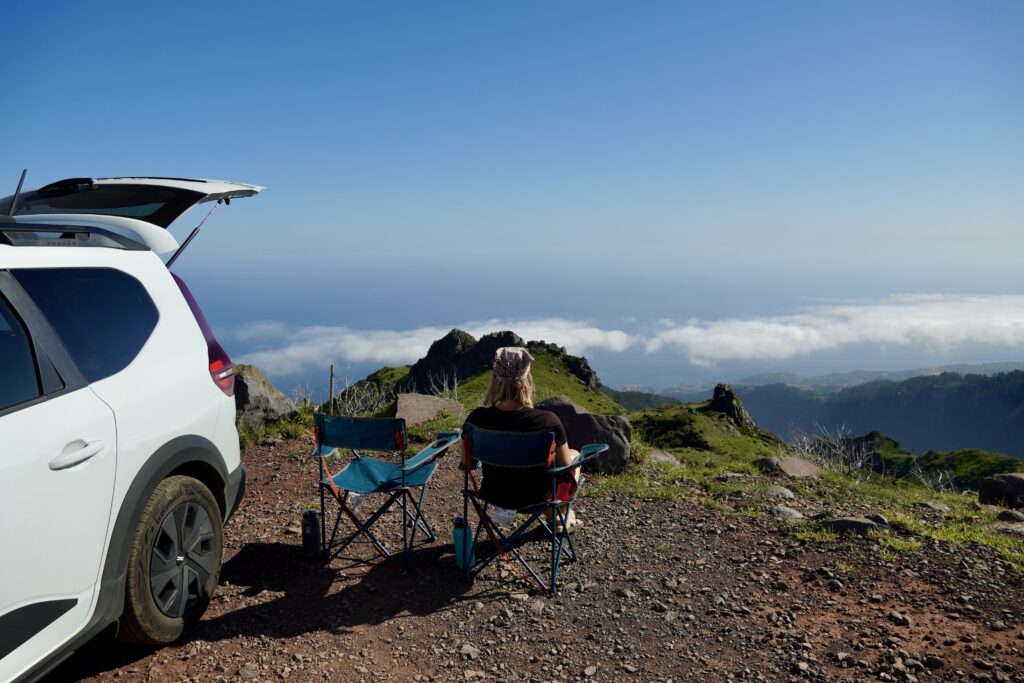
Ultimately, we really enjoyed camping on Madeira. Despite the new permit system making camping more restrictive than it used to be, it’s still one of the most rewarding ways to experience the island.
For us, some of the most memorable moments weren’t the famous viewpoints during the middle of the day, they were the quiet mornings before sunrise and the peaceful evenings after the crowds had gone home. Camping gave us the opportunity to experience those moments in a way that simply wouldn’t have been possible otherwise.
If you’re backpacking or hiking around the island, Madeira is incredibly well-suited for tent camping. It’s an affordable, immersive way to explore, and there are plenty of designated campsites to choose from.
Traveling by car or campervan, however, comes with a few more challenges. There are fewer legal places to stay overnight, so planning ahead becomes much more important. That said, we still wouldn’t trade the comfort of sleeping in our vehicle. We loved having all of our gear with us, staying dry when it rained, and not having to worry about bugs or uneven ground.
Our biggest hope is that Madeira continues expanding legal options for vehicle camping, because there’s clearly a demand for it. But whether you choose to explore with a backpack or a campervan, we’d absolutely recommend camping. It helped us slow down, connect with the island, and experience a side of Madeira that many visitors never get to see.
Watch Our Video Explaining Camping In Madeira
Save This Post For Later