Lisbon is the shining capital city on Portugal’s west coast, tucked inland on the banks of the Tagus River. This hilly city, dotted with red roofs, blends historic sights with modern sophistication.
There’s a great variety of things to explore, from historic buildings, museums, laid-back cafes, nightlife, and more.
In this guide we are going to share all the best attractions around the city and dive deeper into the famous neighborhoods that make up the area. So, lets jump right in to the best things to do in Lisbon, Portugal.
This post may contain affiliate links. Disclosure policy.
Food Tour
There are so many uniquely Portuguese foods and drinks you have to try. And food tours are one of our favorite ways to pack so much local cuisine into one afternoon. It’s great for not only learning popular dishes, but also the significance of their ingredients and methods of cooking.
We loved the food tour we went on, because everything is handled for you. So you just hop from place to place, eating and drinking, without ever having to get your wallet, wait for a table, or anything else. And this was as much a drinking tour as it was a food tour.
Our guide Franco was so friendly and informative, and kept us entertained, and of course, well fed.
From seafood and sandwiches, to wine and cherry liqueur, there are a lot of Portuguese food and drink to indulge in. But I’ll highlight a few favorites.
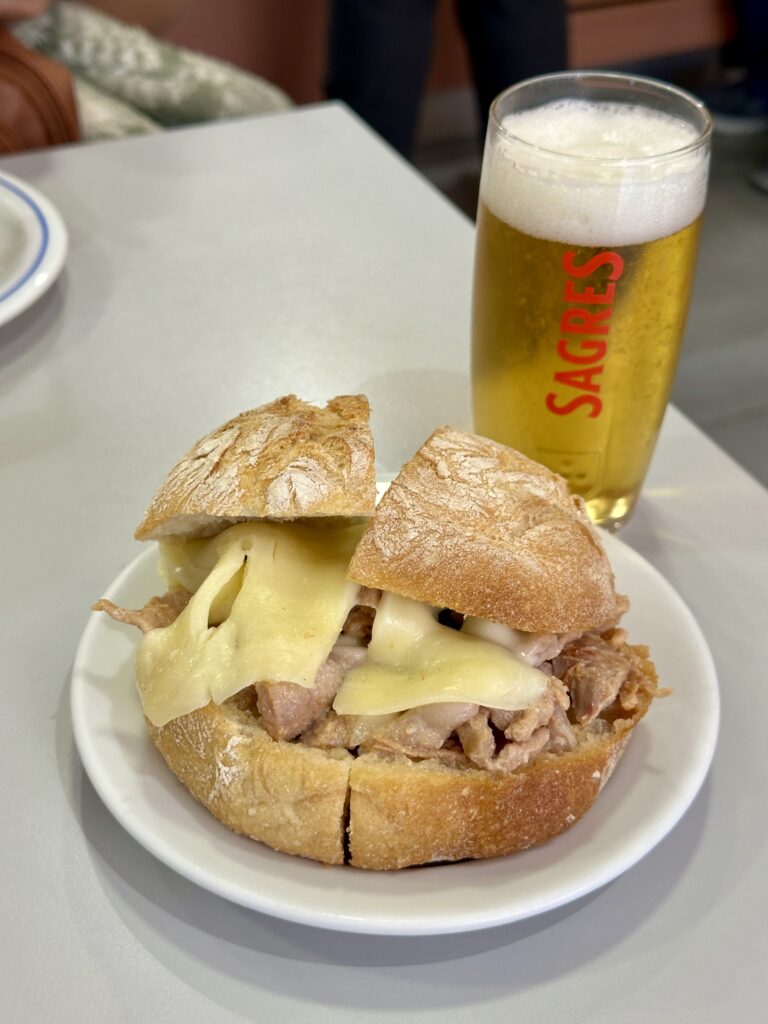
Our favorite Portuguese staple is the Bifana sandwich. A humble but delicious sandwich, often just bread and marinated pork, enjoyed with a beer. You can find these all over Portugal. And for just a few Euros, it’s a super affordable lunch, or late night snack.
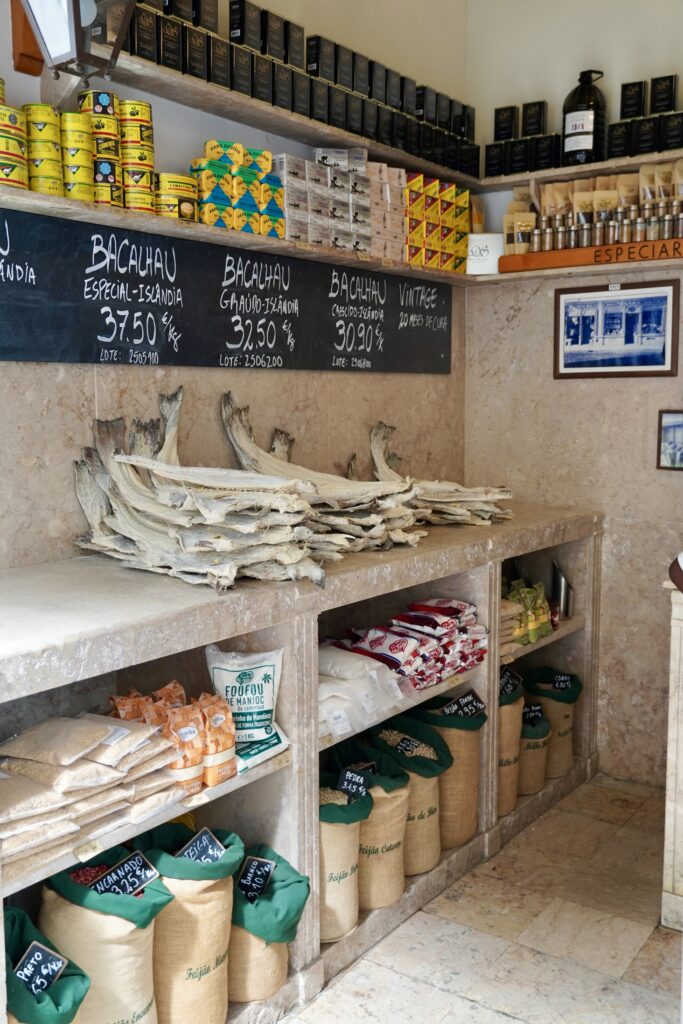
Cod fish is used in many forms in Portugal. But most famous is probably the fried cod fish cakes, (Pastéis de Bacalhau). They are crispy and fluffy little snacks. Or Bacalhau A bras is another popular Cod dish that we loved. It’s like a savory codfish egg and potato salad.
Sardines are another really popular Portuguese food: grilled, marinated, canned, and more. But I think it’s an acquired taste, that we’ve……… yet to acquire.
Then cheeses and cured pork is another staple in Portugal. And how can you indulge in charcuterie without some wine.
Portugal is most famous for Port Wine, the sweet aperitif known around the world. But they also have many white and reds, or even their other light summery wine known as Vinho Verde, or Green Wine. And oh my is the wine in Portugal soooo affordable and delicious. It makes me sad to go back home, where we rarely justify the cost of drinking wine at restaurants.
And this food tour finished with a delicious and savory seafood and rice stew. We were of course so full by the end, but I couldn’t stop eating it.
One of the underrated benefits of a food tour is that for the rest of your trip, you’ll be much more confident ordering from local gems instead of just choosing tourist traps.
👉🥘 Book The Same Food Tour We Did
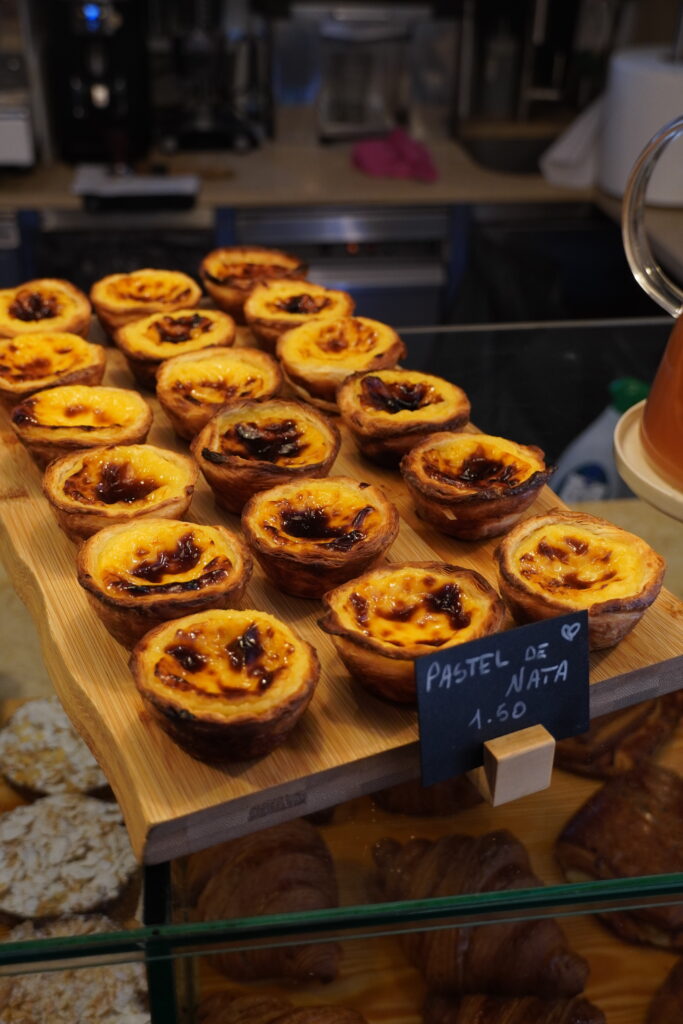
Oh, and we have to mention probably the most famous Portuguese food of all, the Pastel de Nata, a scrumptious little egg custard pastry with flakey crust. We actually didn’t get one of these on our food tour, which honestly was fine with us, because we had already been eating a bunch of them. They’re everywhere around the city!
Two other staples that you MUST-TRY while in Lisbon are the Francesinha and a Prego Sandwich.
The Francesinha is probably Portugal’s most famous dish. It’s essentially a giant sandwich stacked with layers of steak, ham, and sausage, covered in melted cheese and smothered in a rich, slightly spicy beer-and-tomato sauce. It’s definitely not the lightest meal, but it’s one of those foods you have to try at least once while visiting Portugal.
Another sandwich you gotta try is the Prego. This Portuguese classic is made with thinly sliced, garlicky steak tucked into a crusty roll. It’s simple, inexpensive, and makes for a great quick lunch or snack while you’re out exploring the city.
Saint George’s Castle (Castelo De São Jorge)
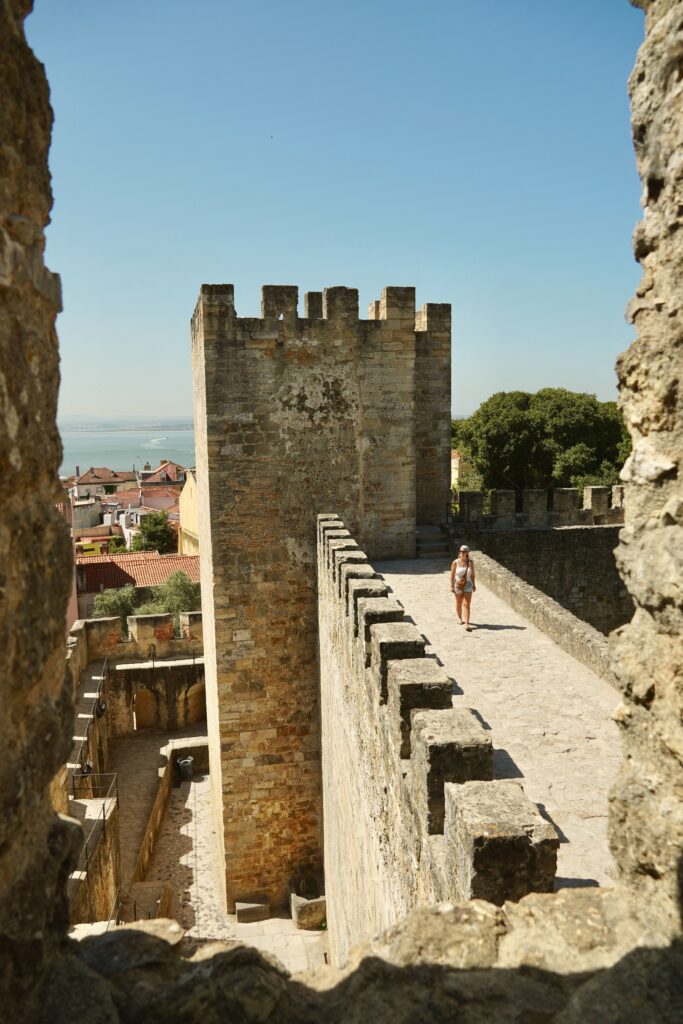
This imposing medieval castle has been standing on this hill above Lisbon since the 8th century. It offers not only an incredible glimpse into Lisbon’s storied past, but also has some of the best views in the city.
It’s been occupied by The Phoenicians, The Carthaginians, The Romans, The Moors, and finally the Portuguese. I loved that you are allowed to actually explore most of the castle, including walking on the walls and climbing up the towers. And the peacocks that roam the grounds are a seemingly random extra bonus.
Admission is 17€ for adults, and if you come midday, expect to wait in a line for tickets. Or you can buy them online in advance.
And I will say that for us, just coming for the views and to admire the castle was enough for us. But if you are looking for a little more information and context, they offer an audio guide. So it’s not a bad idea to bring headphones for easier in public. Or guided tours are also available.
The audio guide is one of the best I’ve heard, with tons of information about the castle, its history, and Lisbon in general. And it’s divided up nicely by area, so you can jump in and out of sections as you please.
Without the audio guide, it’s still nice, but you will miss some of the information that helps really add more appreciation of the site.
Also, a bonus recommendation near the castle. Check out Ludo’s. It’s was a delightful little brunch spot.
Lisbon Cathedral (Sé de Lisboa)
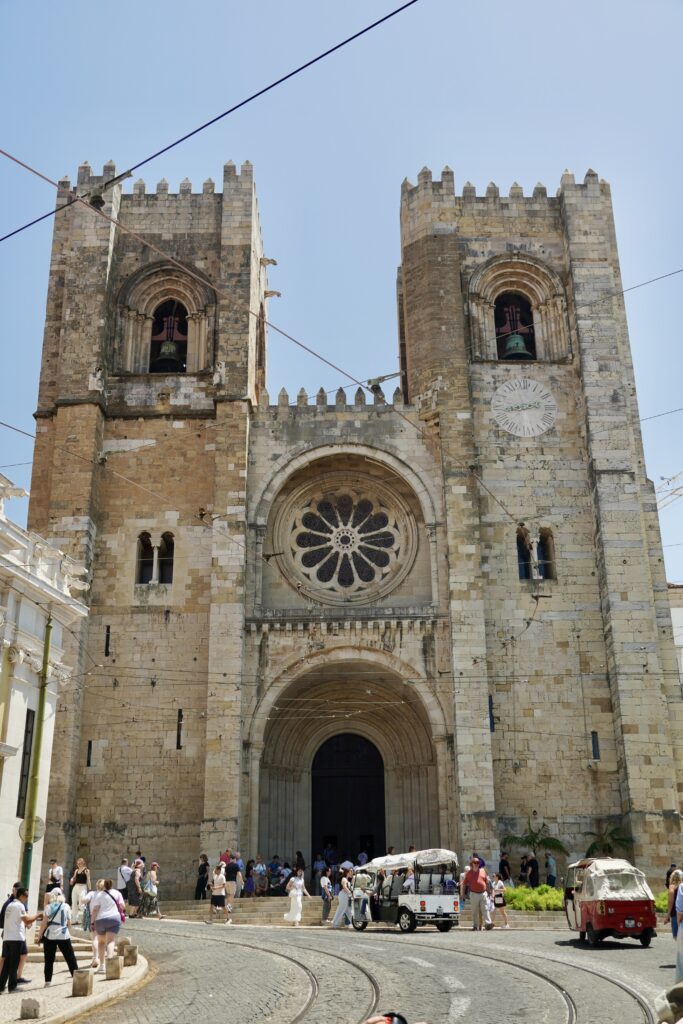
This is one of the most famous churches in Lisbon. The Cathedral was severely damaged from the earthquake of 1755, that destroyed much of Lisbon. It’s hard to unpack the 800 years of history of this sacred building. And it’s gone through many changes throughout that time, some repairs out of necessity and others to fit the style of the times.
So what we see today is a blend of architecture styles like Roman, Gothic, Baroque, Neoclassical, and more. The distinctions between which are honestly lost on us. But anyone passionate about architecture will be especially impressed.
The interior isn’t overly ornate. But we loved marveling at the quiet power and beauty of the building. Plus it’s artwork, stained glass, and this stoic church organ.
There is an entrance fee of about 7€ euros per person, but the day we were there, it was free to enter. Still not really sure why.
And when streetcars pass by the church, it’s undeniably one of the most postcard-worthy Lisbon sights.
Alfama Neighborhood
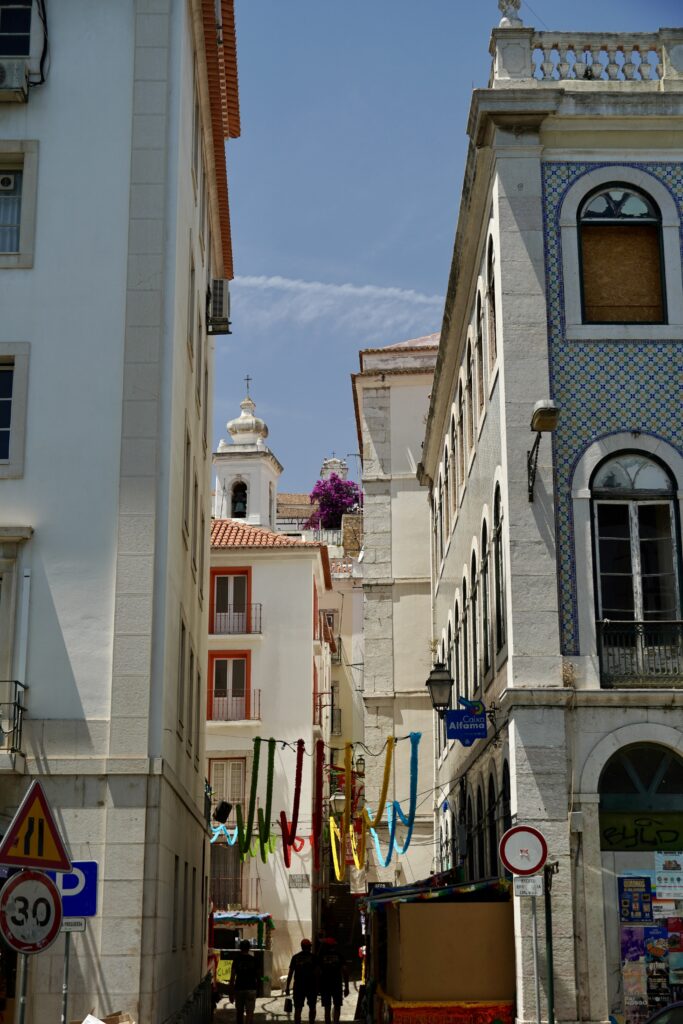
If you come up to the Lisbon Cathedral, this whole neighborhood is definitely worth some time for exploring. Alfama is Lisbon’s oldest neighborhood famous for its narrow streets. It’s tucked between the cruise port and Saint George’s Castle. Alfama is known for its Moorish influence, which are islamic North Africans who have deep rooted history in Portugal.
While most of Lisbon was rebuilt in a different style following the Earthquake of 1755. Alfama remained mostly intact, and still retains more of its medieval layout and architectural style.
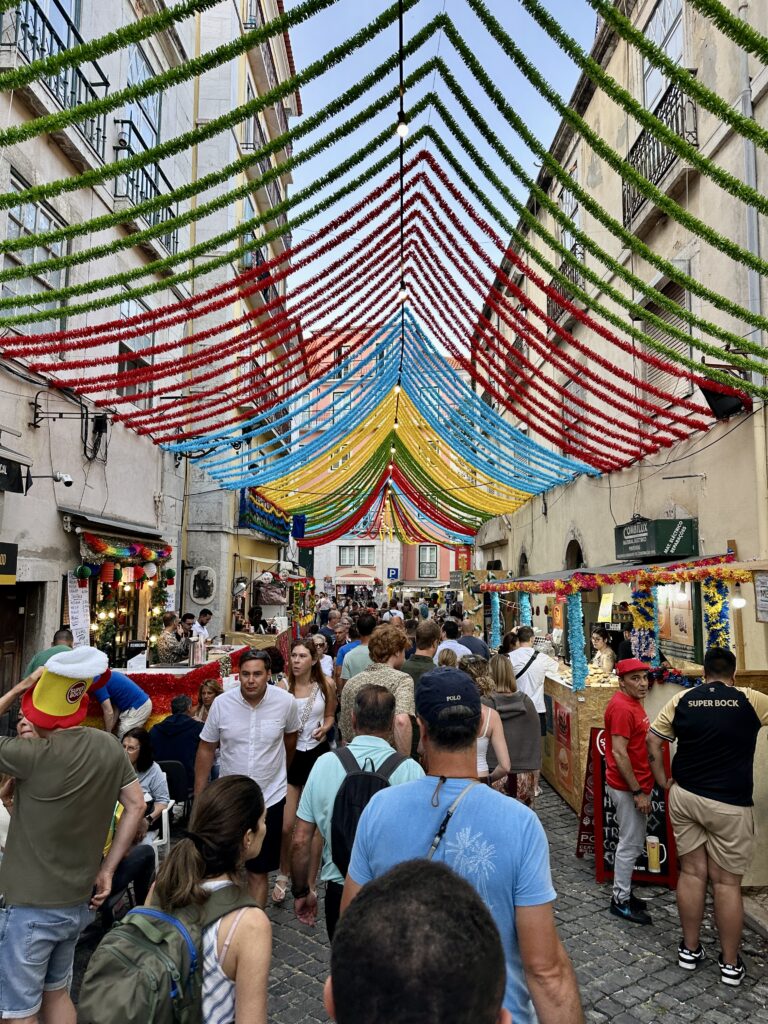
Honestly, just getting a little lost in Alfama’s narrow windy streets is a worthy activity in itself. The neighborhood is not overly polished, and still has a very lived-in feeling. We happened to be in Lisbon in June during the Popular Saints festival, that turns the streets into decorated party spaces, with music, drinking, and street food. So it doesn’t always look decorated like this.
But there’s a variety of notable landmarks in Alfama that are worth checking out anytime of year.
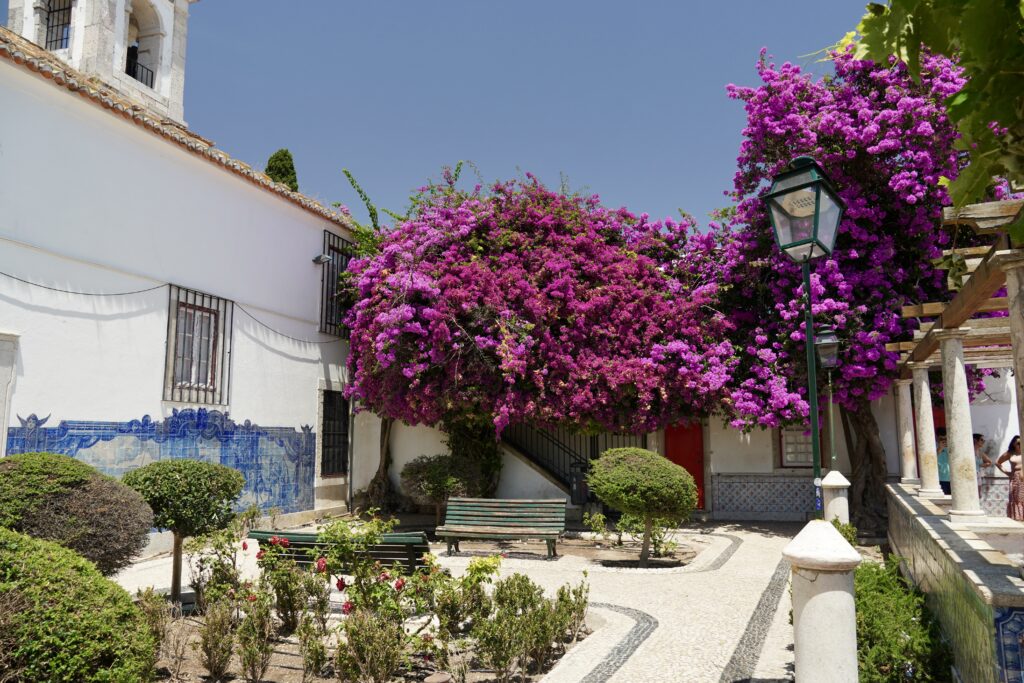
The aforementioned Lisbon Cathedral is a good place to start. From there, wind your way up Rua Augusta Rosa to the Church of Santa Luiza. This church is adorned with beautiful azulejos, and its terrace is one of the most famous viewpoints in Lisbon.
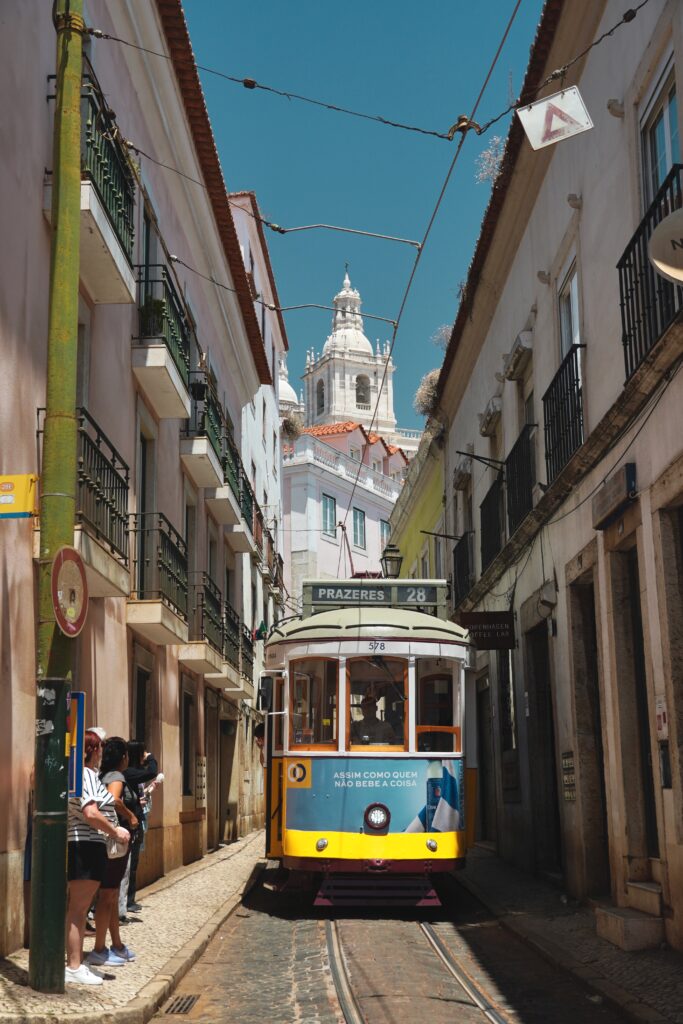
Tram 28 runs through Alfama and is probably the most famous Tram line because of the narrow streets. You can pay to ride the tram as transportation, or as a photographer, I enjoyed simply following the tracks and just waiting for them to rattle on by for some great photo ops.
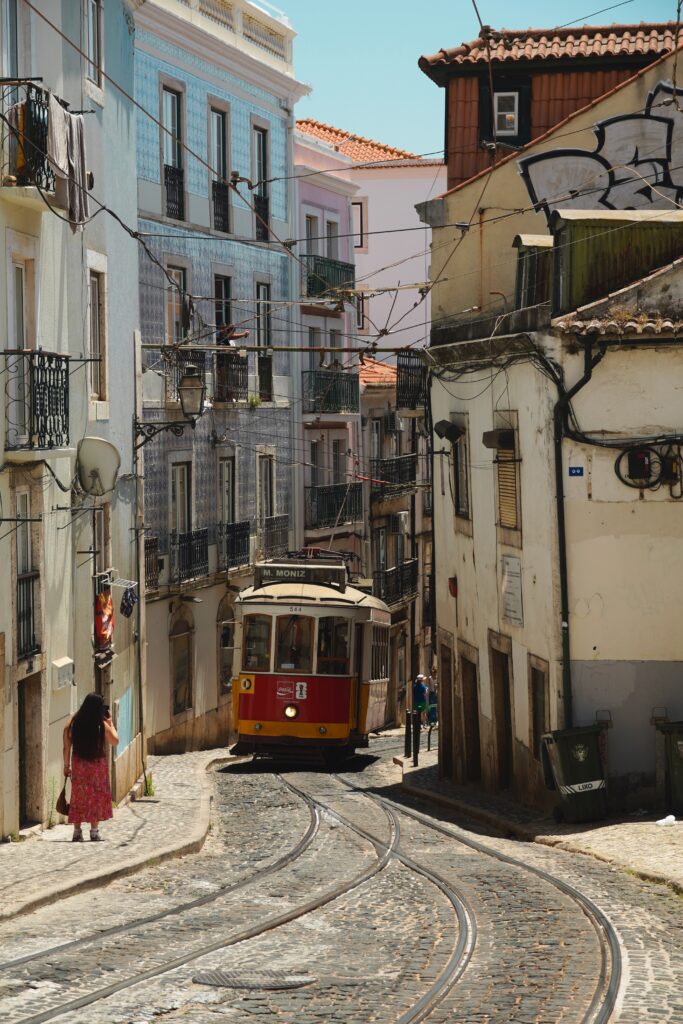
Alfama is also said to be the birthplace of fado, the most quintessentially Portuguese music. And the Museum of Fado is found right here too. Which brings us to the next thing on our list.
And right next to this is the Church of Saint Anthony, which might be worth checking out while you are here.
Experience A Fado Show
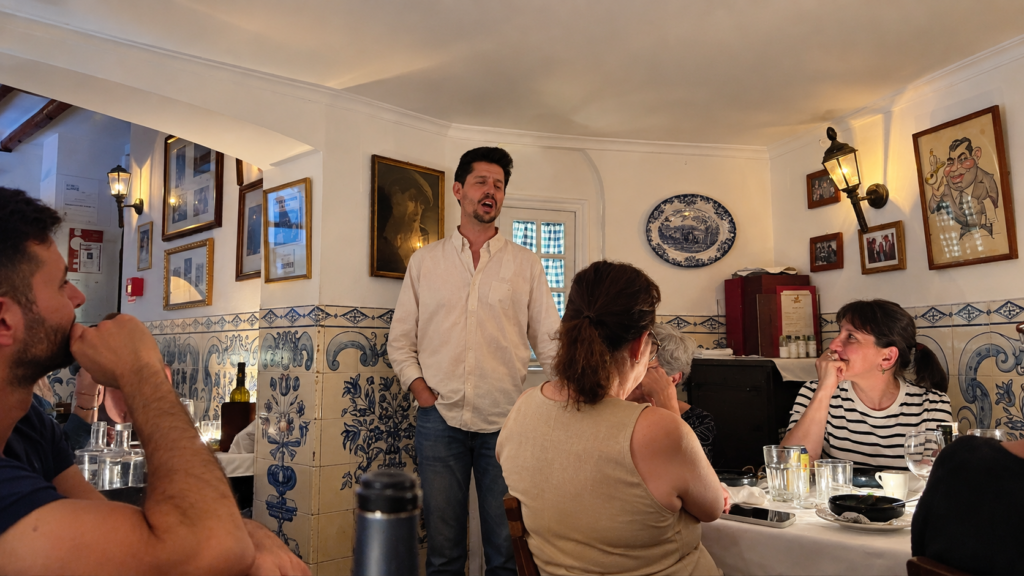
Fado is a type of Portuguese Folk music that is, in many ways, the soundtrack of Portugal. Dating at least as far back as the 1820s. It’s born out of the dimly lit taverns of working-class Lisbon neighborhoods. The best Fado houses are typically found in Alfama and the Barrio Alto neighborhoods.
The music is known for powerful vocals accompanied by string instruments. They carry melancholy melodies and lyrics of longing, nostalgia, love, and perseverance.
We went to a super intimate Fado dinner evening at one of Lisbon’s oldest Fado houses in Alfama. And we have limited footage to share with you, 1 – because they implored the audience to be present and keep our phones away, 2 it’s dimly lit in there, and 3, I was basically shoulder to shoulder with one of the guitar players. Talk about a front row seat!
They had three different Fado singers who performed several times throughout dinner. Which, the food by the way was absolutely delicious.
One of the singers is like 90 years old and a living legend of Lisbon Fado. Her gravelly voice carried so much weight and emotion.
But the younger female singer really stole the night for us. Her impeccable vocal technique and powerful voice just melted us into a trance.
👉🎤💃 Book The Same Fado Show We Did or choose this more budget-friendly show
Explore Baixa District
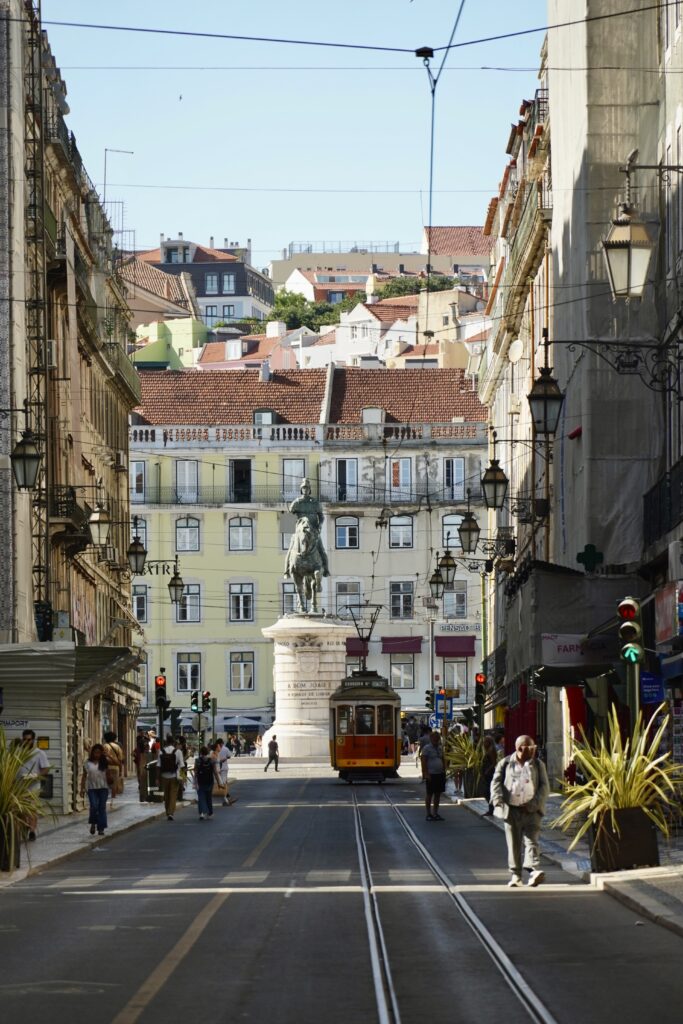
This downtown area is one of the most central districts of Lisbon. It’s an elegant and lively space that connects Lisbons waterfront with its most emblematic squares. Like Commerce Square and Rossio Square, among others.
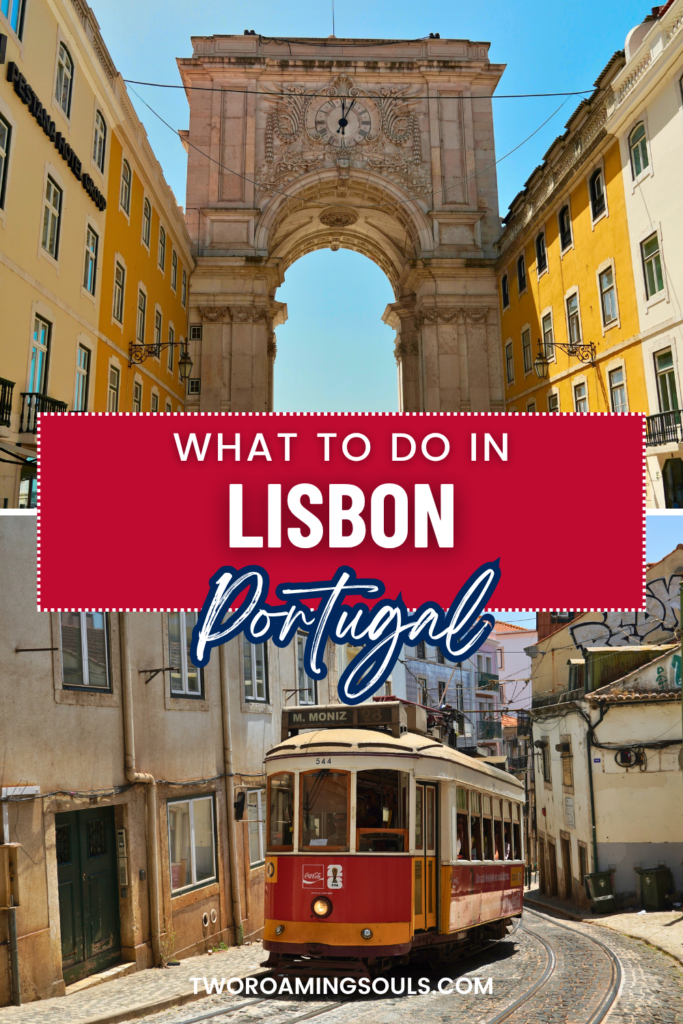
Right down the middle is the Rua Augusta, or Augusta street, the central pedestrian promenade that funnels down to the Rua Augusta Arch.
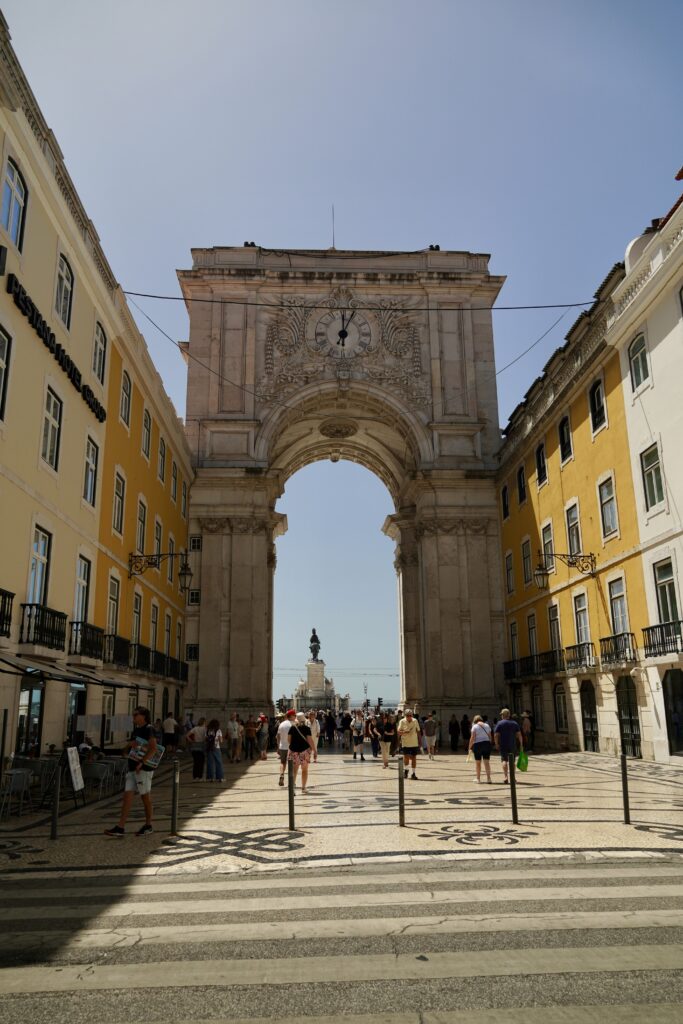
The grid of streets is lined with outdoor restaurants and many shops.
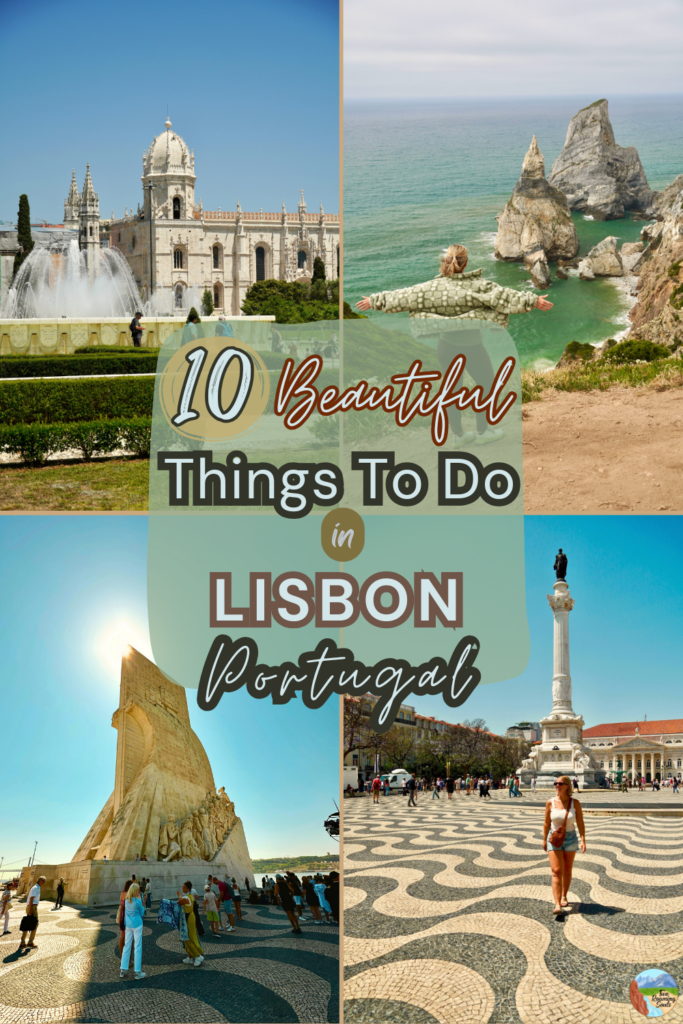
Baixa is a great place to see some of the most beautiful examples of traditional Portuguese pavement, or Calçada Portuguesa. It’s made of small hand cut stones arranged into beautiful mosaics and other patterns. And while it’s beautiful and iconic to Portugal, I should note that it is not always the safest pavement for pedestrians. It gets very slippery when wet, and the uneven surface is not ideal, especially for elderly, wheelchairs, etc. So there’s an ongoing struggle in Portugal choosing between historical and aesthetic preservation, or modern practicality and safety.
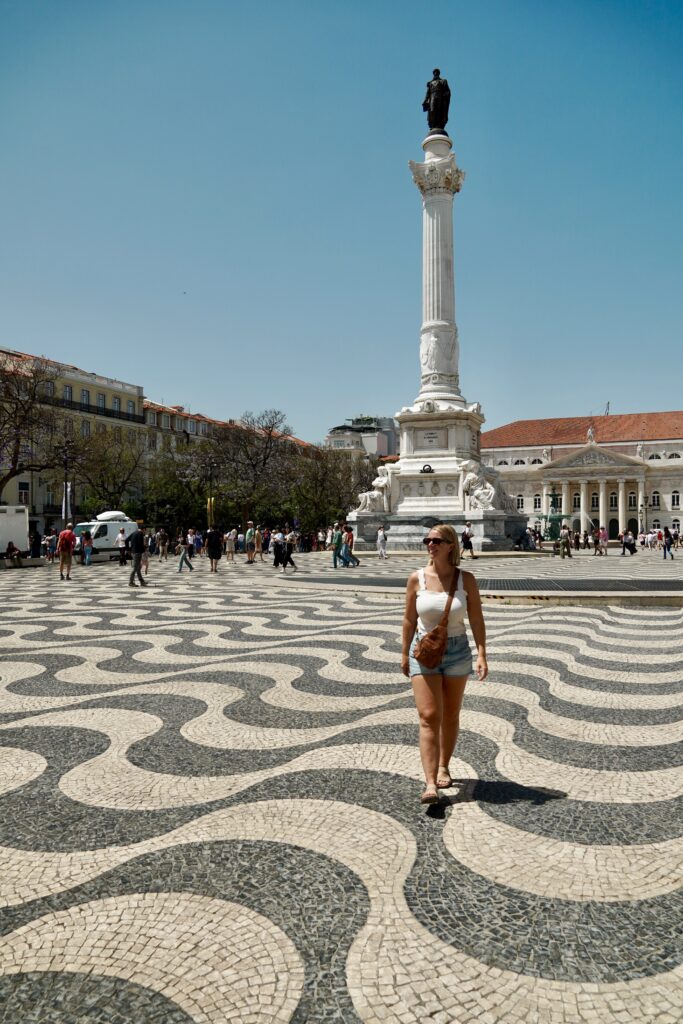
While I do think the Baixa District is worth checking out, just be aware that it’s probably the most overwhelmingly touristy area in the city. This kind of shopping is not really our thing, and I prefer to eat at restaurants that don’t beg you to come sit down.
But if you are wandering around Lisbon, you’ll probably end up here at some point inevitably. Because like water, a tired tourist always flows downhill.
Which, one other notable landmark here is the Santa Justa Elevator. It was closed for repairs when we visited. But it’s known for providing unique views of the city. It’s part tourist attraction, part practical transportation. If you’ve come down to Baixa, the elevator can help you get back uphill to the Chiado neighborhood, and pops out right next to the next thing on our list.
Convento Do Carmo
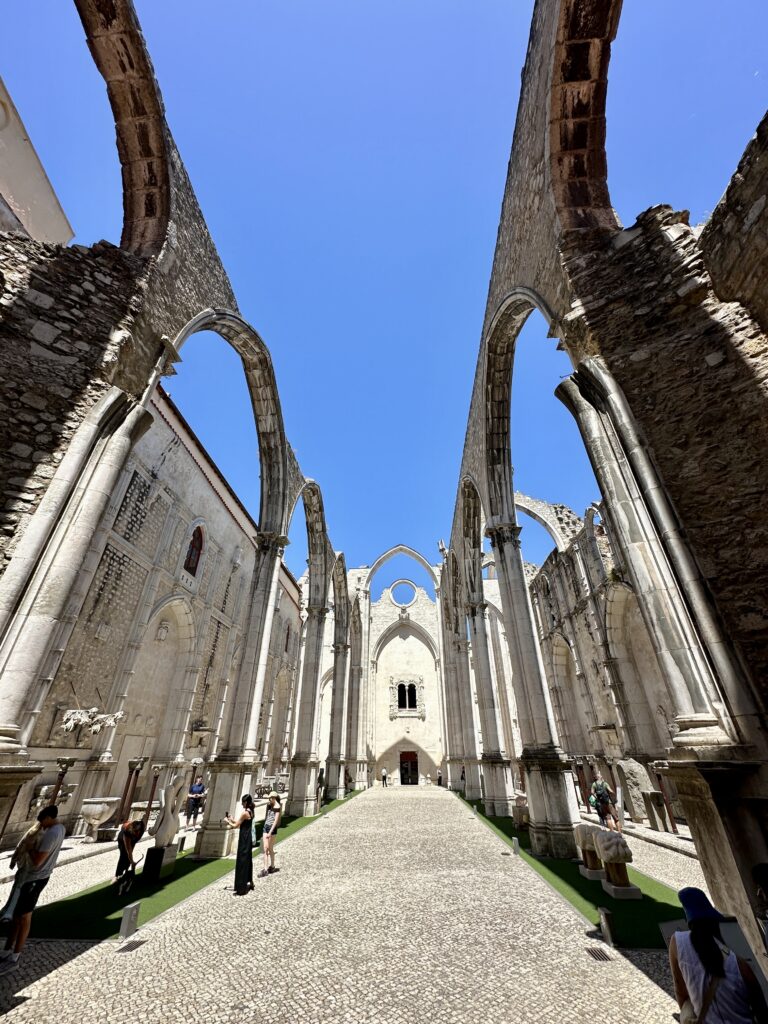
This open-air gothic ruins is one of the most unique historic buildings in Portugal. Built way back in the 14th century, and most notably, suffered serious damage during the Lisbon earthquake of 1755.
The quake destroyed much of the roof, leaving behind the walls and some arches. Despite discussions to repair the damage, it was decided to leave the building roofless.
So today, it’s enjoyed as a one-of-a-kind landmark, blending gothic architecture against an ever-changing sky. And I can’t help but think that in a weird way a church with no roof actually brings you closer to god.
People recommend trying to see it after dark, when you can see stars, or apparently they also have a light show sometimes. But I couldn’t find any recent information about a schedule.
The back part of the building has been turned into the Archeological Museum of Carmo. This small museum is worth checking out for its interesting collection of archeological treasures.
And the whole experience for just 7€ for adults, made this site a can’t-miss for us.
Barrio Alto & Chiado Neighborhood

The Barrio Alto and Chiado are two of our favorite neighborhoods in the city. They are kind of right next to each other, so we’re including them together.
I felt like we just kept finding restaurants and things that would draw us into this part of the city.
Barrio Alto is known as the nightlife area, with lots of unique bars, fado houses, and more. And Chiado is one of the classier areas, is historically the bohemian district of Lisbon, attracting poets, artists, and writers.
Like us, you’ll probably stumble upon your own points of interest. But here’s a few notable things to check out.
One of Chiado’s most famous spots is A Brasileira. A beautiful and historic cafe, known as the meeting spot for Portuguese writers. Most famously, Fernando Pessoa, whose statue sits out front. Honestly, we found this spot a little too touristy for its own good. But at the very least, it’s cool to peak inside.
There’s a few other notable churches in this area if you’re interested, like the aforementioned Carmo Convento. But also Church of Our Lady of Loreto, Church of Our Lady of the Incarnation, and the Church of Saint Roque.
Or some deeper cuts…
- Le 17.45: is a French restaurant serving up the most top-notch charcuterie boards we’ve ever had.
- The Broteria: is a gorgeous building, that’s part workspace, cultural center, art exhibit, and just beautiful building in itself.
- Cerâmicas na Linha: is a beautiful pottery store with everything from housewares to beautiful works of art.
- The Trinidade Brewery: is a craft brewery and restaurant built inside an old convent.
- Pavilhão Chinês: A very unique bar that’s sophisticated and elegant.
And there’s lost more to uncover in these neighborhoods.
Visit A Miradouro
Lisbon is full of awesome viewpoints, or in Portuguese, miradouro. And viewpoints are one of the best free things to do in Lisbon, especially at sunset. And I could tell that it’s just as popular among locals as it is for tourists.
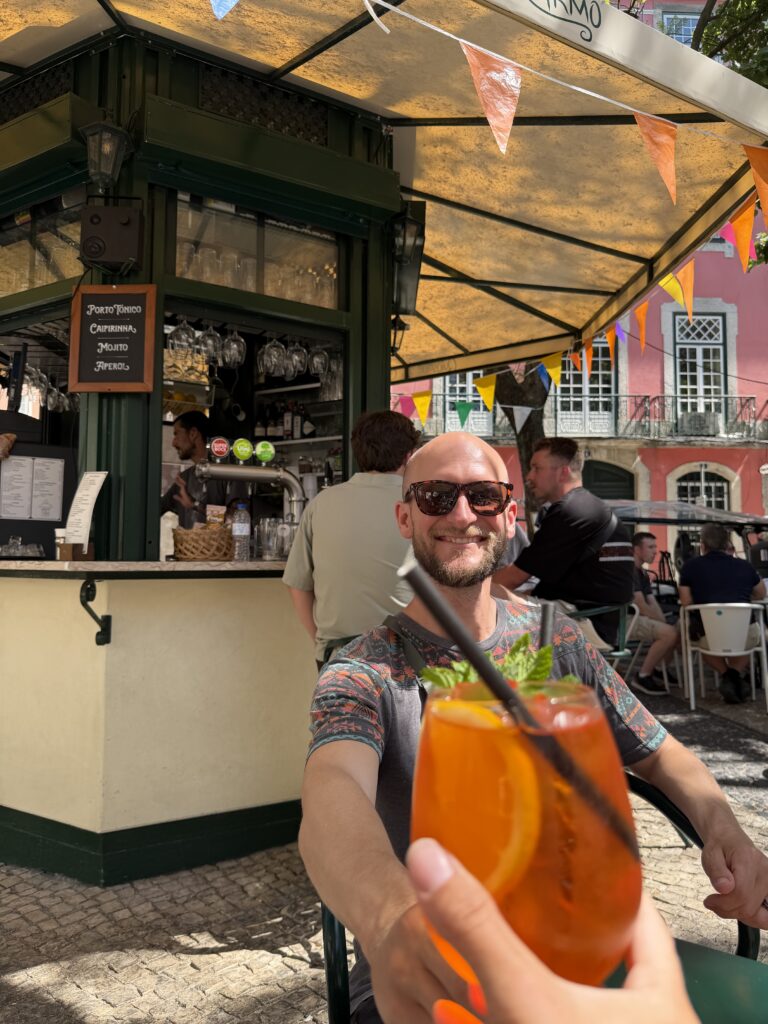
And they also often have kiosks. Which is kind of like a can’t-miss cultural staple of daily life in Lisbon. These little bars are set up in parks, squares, and at viewpoint around the city. They are great casual option for enjoying a drink while immersed in the cities ambiance. And that relaxed atmosphere always feels distinctly European.
I’ll highlight a few of the best viewpoints.
Now, I wouldn’t necessarily travel across the city just for a specific viewpoint. But from anywhere in Lisbon’s historic center, you are likely never too far from one of these.
So, in no particular order….
Miradouro de Santa Luzia
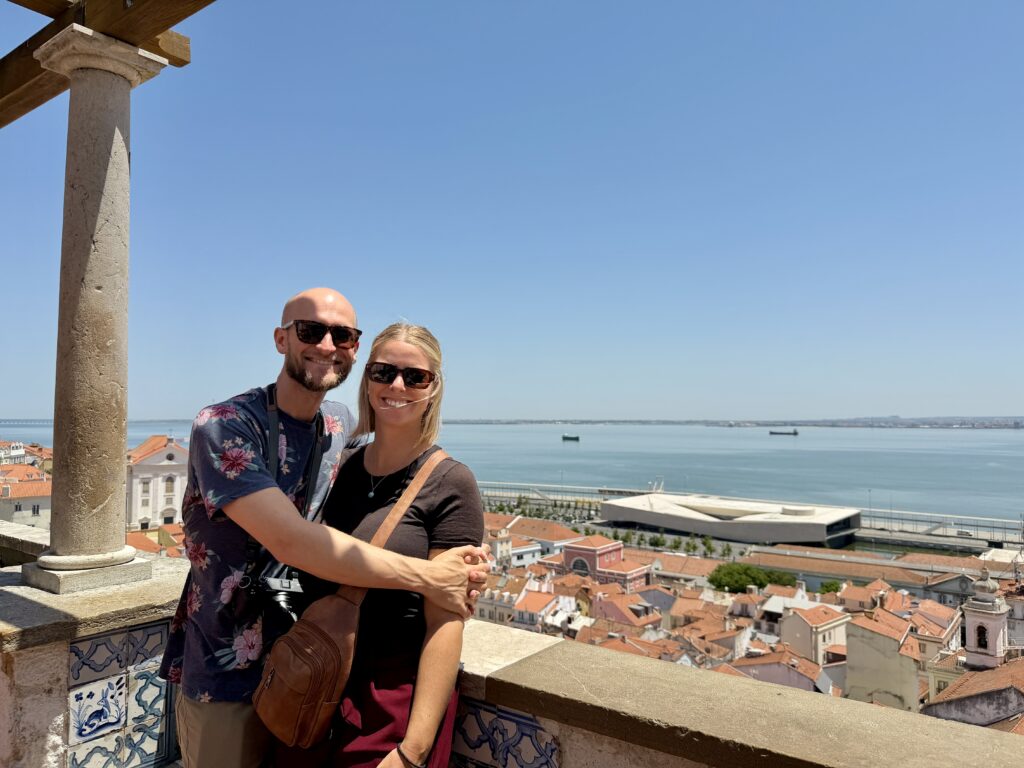
This popular viewpoint has a beautifully landscaped terrace that looks out over the Alfama District and the river. This one is especially photogenic for the flowery veranda and the church’s beautiful azulejos, those iconic Portuguese blue tile murals. But this viewpoint is often too busy for it’s size, so if you want a little more space, right around the corner is the two larger mirodouros, Portas Do Sol and São Vicente.
Miradouro da Graça
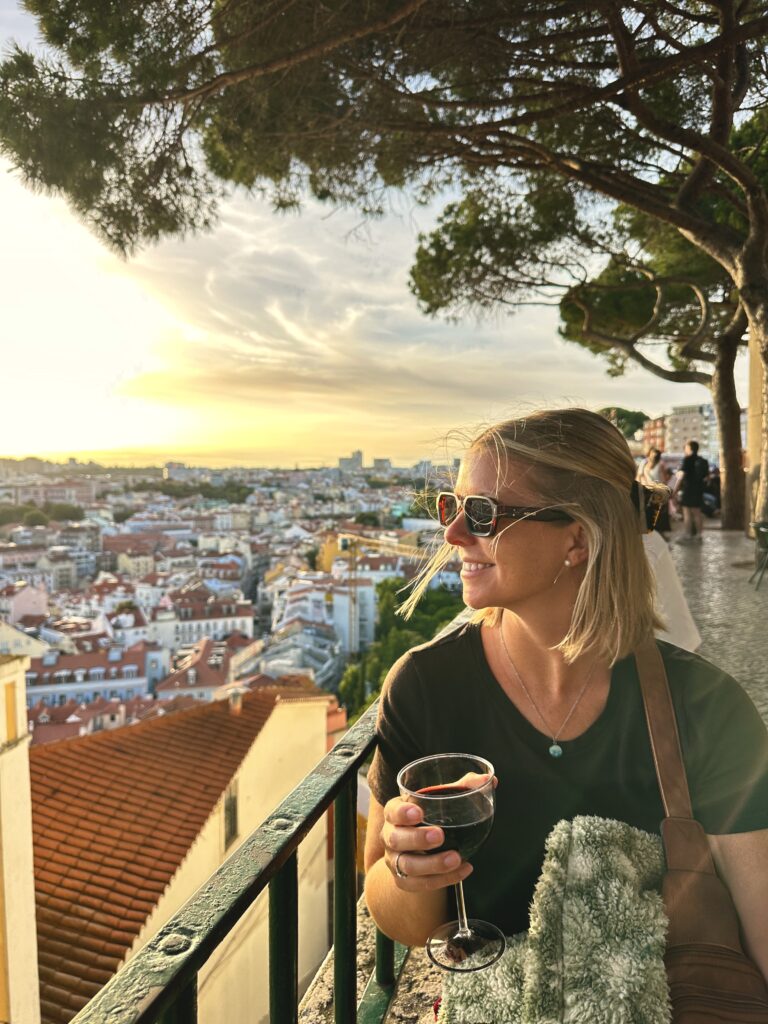
This viewpoint is in the Graça neighborhood, and kind of nestled beside Saint George’s Castle. And being west facing, it’s a favorite for sunsets. And there is also a kiosk here, and it backs up against the Church of Our Lady Grace. And below the viewpoint there’s a winding staircase full of awesome street art. And there’s also a funicular right next to it that you can ride up or down.
Miradouro de São Pedro de Alcântara
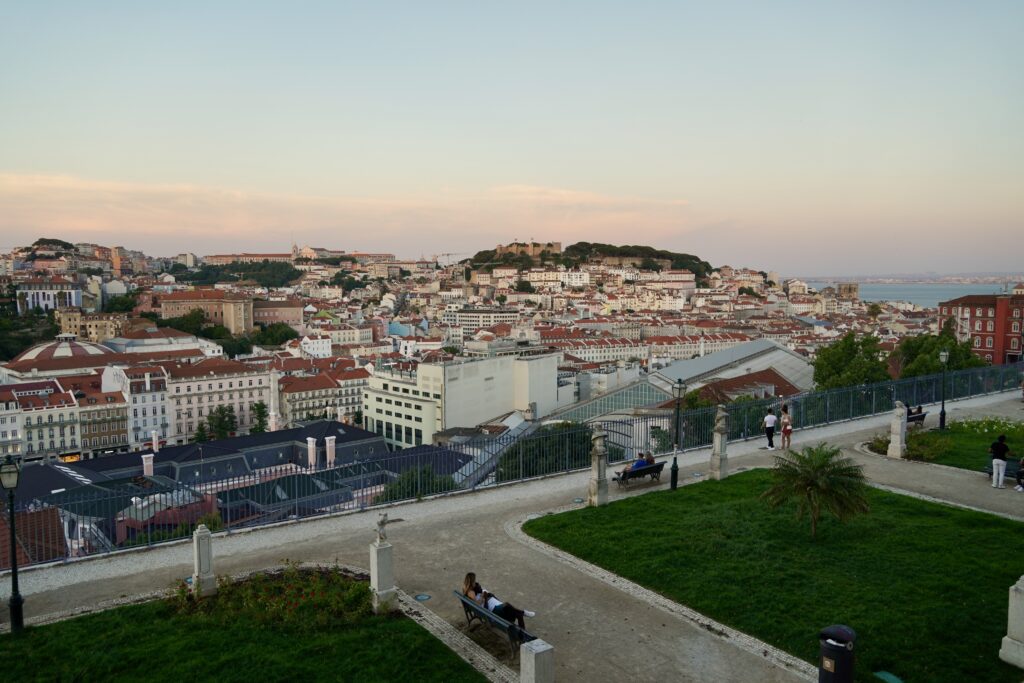
This one is in the Barrio Alto neighborhood. It’s giant landscaped terraces face East, so you won’t be able to literally watch the sun set. But the views are still beautiful. It has to two kiosks. Or when we were here, there was a giant outdoor party going on for the Popular Saints Festival.
Belém Neighborhood
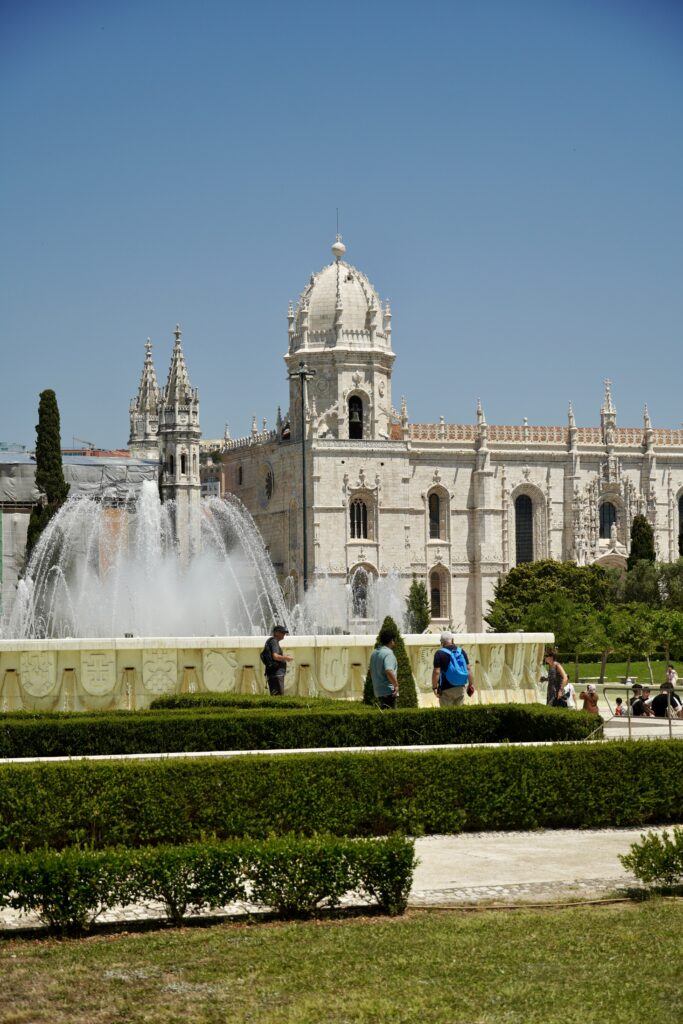
This neighborhood west of downtown is definitely worth a half-day visit. But pay close attention to our advice here, because some of the things here are set up terribly and can lead to a bad experience.
This area is a hotspot for tour buses, so lines and crowds can spring up really quickly around here.
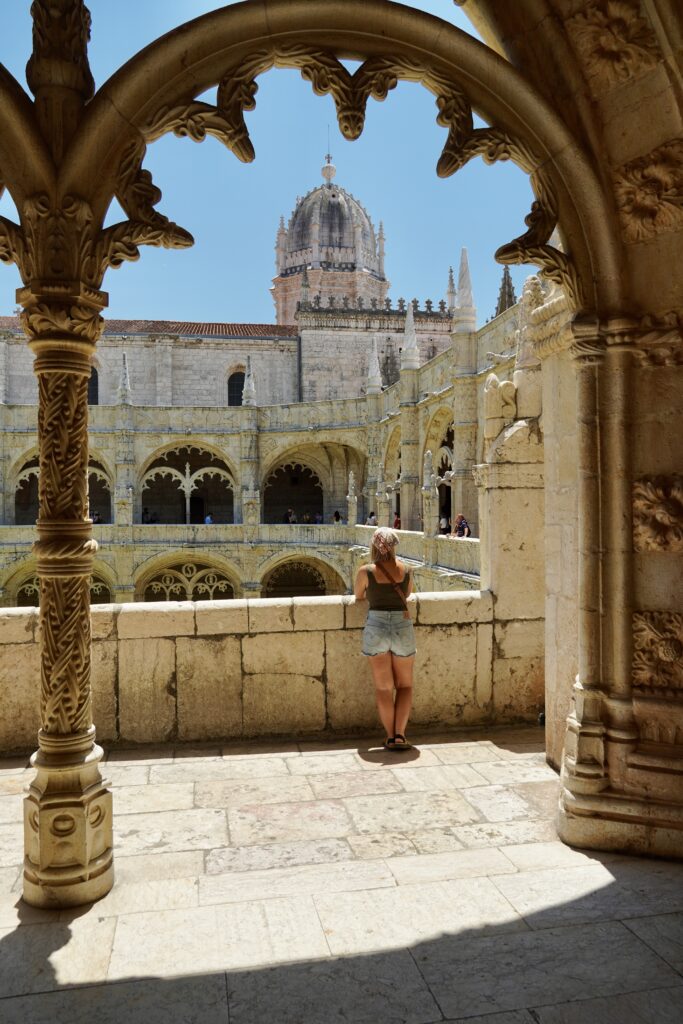
But to start with the good, Jerónimo’s Monastery is one of the most beautiful historic buildings in Lisbon. The Gothic cloister is just so stunningly beautiful. With dozens of pillars each carved with a different pattern from the next. And I loved the way natural light illuminates every inch with golden light. Just mesmerizing to take in from every angle. But sadly a massive part of the Monastery was being renovated during our visit, and they were still charging full price. Which is 18€ per adult.
We only got to see the two floors of the cloister plus a couple of side rooms. A room with Vasco De Gamma’s tomb, and a dining room with beautiful azulejos, those blue ceramic tile murals that are iconic to Portugal.
But overall, we felt like the place was rather empty and lacking in informational placards or exhibits. Perhaps they just want to let the architecture speak for itself, and we weren’t able to see the maritime museum, so maybe that would have made the price feel more appropriate.
Attached to the Monastery is the Church of Santa Maria, which is free to enter.
And then along the shore, there are two other landmarks worth checking out as you stroll the riverfront.
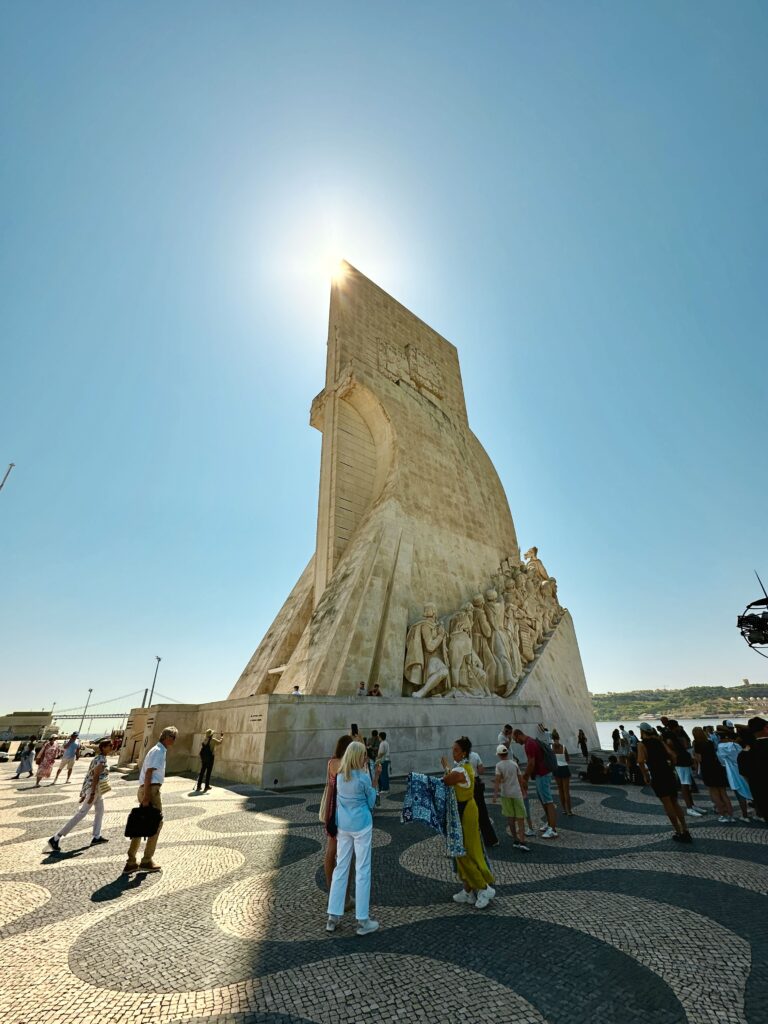
The Discoveries Monument, honors the maritime exploration history of Portugal, especially Henry the Navigator.
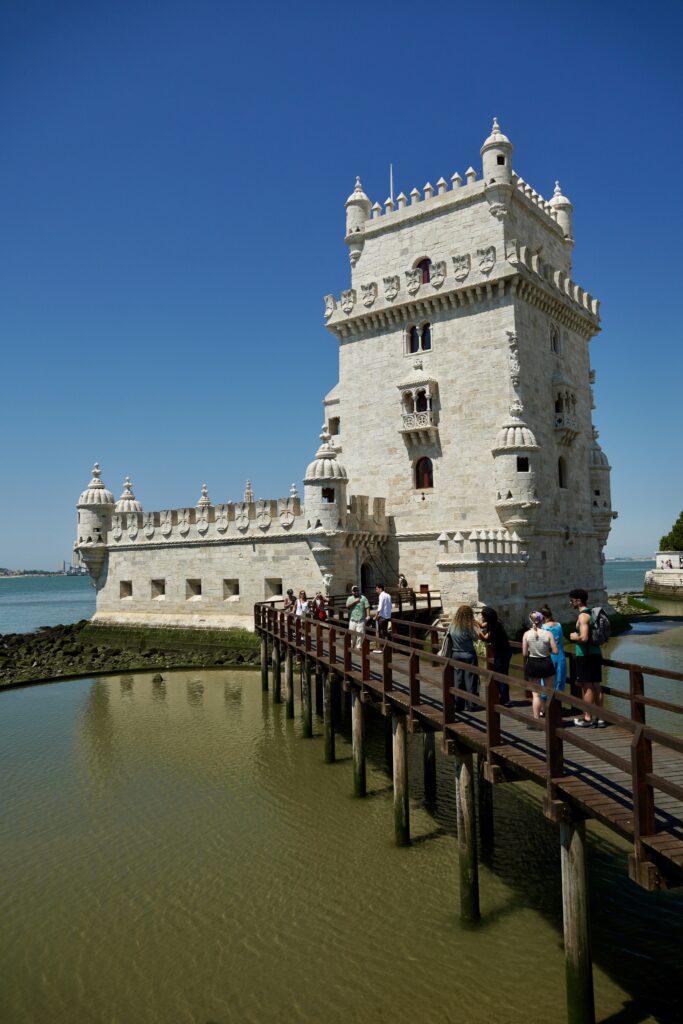
And then a little farther down, Belém Tower, a 16th-century fortification that is now a sort of ceremonial gateway to Lisbon.
You can enter and climb both of these buildings too. But we skipped it, finding the 15€ for Belem tower, and 10€ for The Monument of Discoveries a little too pricey.
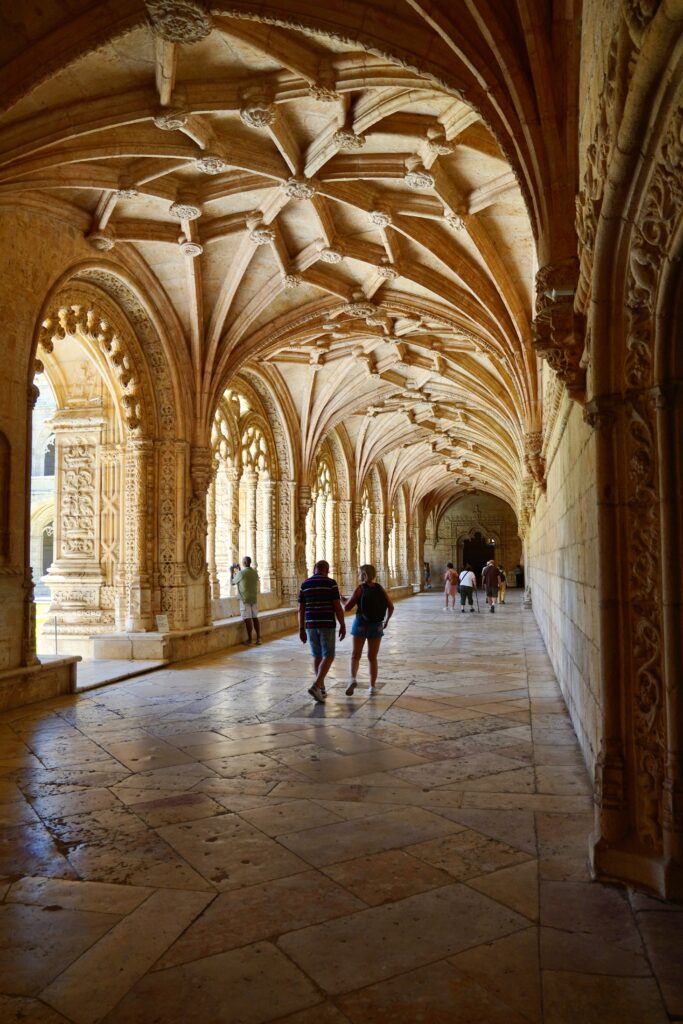
But back to Jerónimo’s Monastery, getting tickets and getting inside can be a bit of a chore. You can buy tickets in person, and potentially wait in your first line, which is across the street. And you have to choose a timed-entry slot. So if you do it this way, go get tickets first, and then you can do the other sightseeing around if you have time to kill.
And if you do want to get tickets for the Belém Tower, they are also sold here, which confusingly is quite a walk away.
You might think that buying tickets online allows you to skip the lines, but it’s only this first ticket line. Even with timed-entry reservations, it’s common to have massive lines that form out front in the bright hot sun with no shade.
And then to go into the Church of Santa Maria, you have to wait in a separate line again in the same exact spot, which just seems cruel. So beware if you come here in hot weather.
The other thing you can do if you have time to kill before your timed-entry slot is get a Pastel de Nata from the famous Pasteis de Belem, who claims to be the originator of the famous Pastel de Nata. And while the interior is cool, and the pastels delicious, you can easily skip this if the lines are crazy, cuz like we said, you can get great Pastels de Nata from so many places. Even just down the road on the opposite side is Manteigaria, another top-tier maker of Pastel de Nata.
Or we were shocked to find this true local gem right along the main touristy row, Pão Pão Queijo Queijo (Bread, Bread, Cheese, Cheese) is a basic no-frills counter service spot that makes delicious kebab sandwiches on pita or home-made baguettes.
Time Out Market
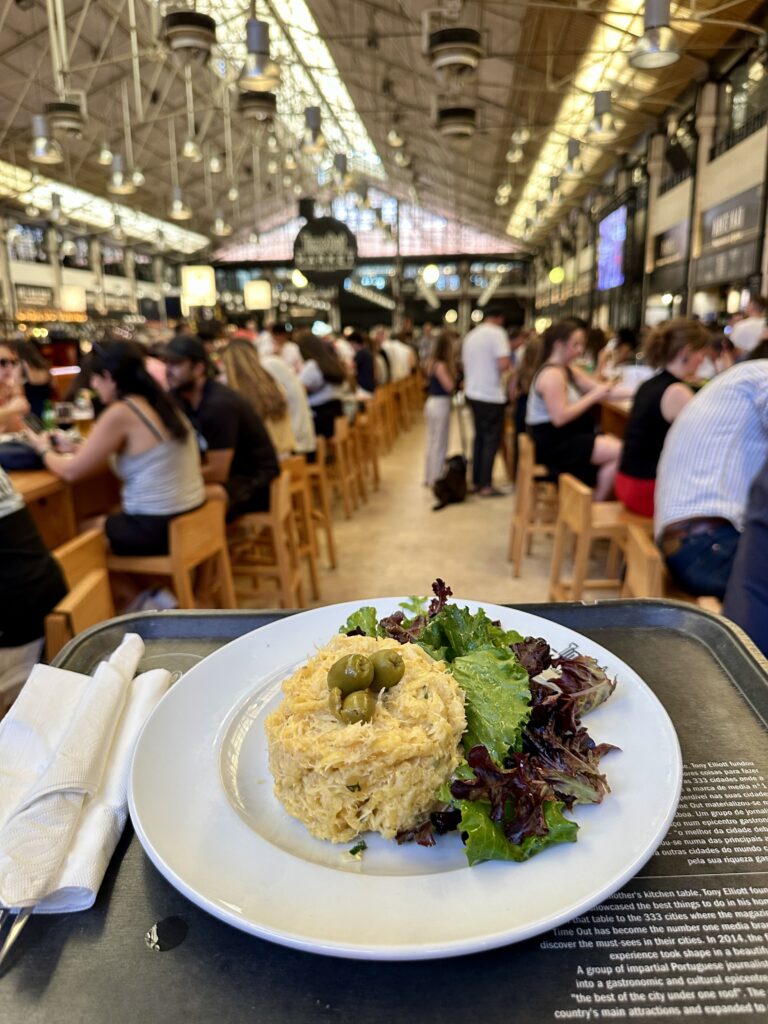
This giant modern food hall is packed with all kinds of Portuguese staples, along with cuisines from around the world. I’ve always loved food halls because of the energy and the huge variety of options, and Time Out Market is a great place to sample a few different dishes without having to commit to just one restaurant.
On our visit, I grabbed a prego sandwich from Café de São Bento and a delicious cookie from Funky Chunky, while Jake went with the Bacalhau à Brás from Henrique Sá Pessoa. There are tons of other options to choose from, so you can easily find something whether you’re craving traditional Portuguese food, seafood, sweets, or something completely different.
One thing to keep in mind is that it can get very busy and loud. I personally enjoyed the lively atmosphere, but Jake found the crowds and noise a little overwhelming. If you prefer a quieter dining experience, this might not be your favorite spot. Still, if you enjoy food halls and want to try a variety of foods in one place, it’s worth checking out.
Ursa Beach

If you’re looking for a little adventure outside of Lisbon, Ursa Beach is one of the most stunning spots to add to your itinerary. Tucked along Portugal’s rugged coastline, the beach is surrounded by dramatic cliffs and massive rock formations, making the views pretty incredible.
The hike down to the beach itself is quite a chore, and the trail can be steep and challenging in places. Honestly, though, you don’t have to make the trek all the way down to enjoy it. There are several viewpoints from above where you can take in the coastline and get some amazing photos.
While you’re in the area, be sure to stop at Cabo da Roca, the westernmost point of mainland Europe. There’s a lighthouse, a monument marking the point, and several viewpoints overlooking the Atlantic. The two spots are close enough that it’s easy to visit both on the same outing.
Day Trip To Sintra
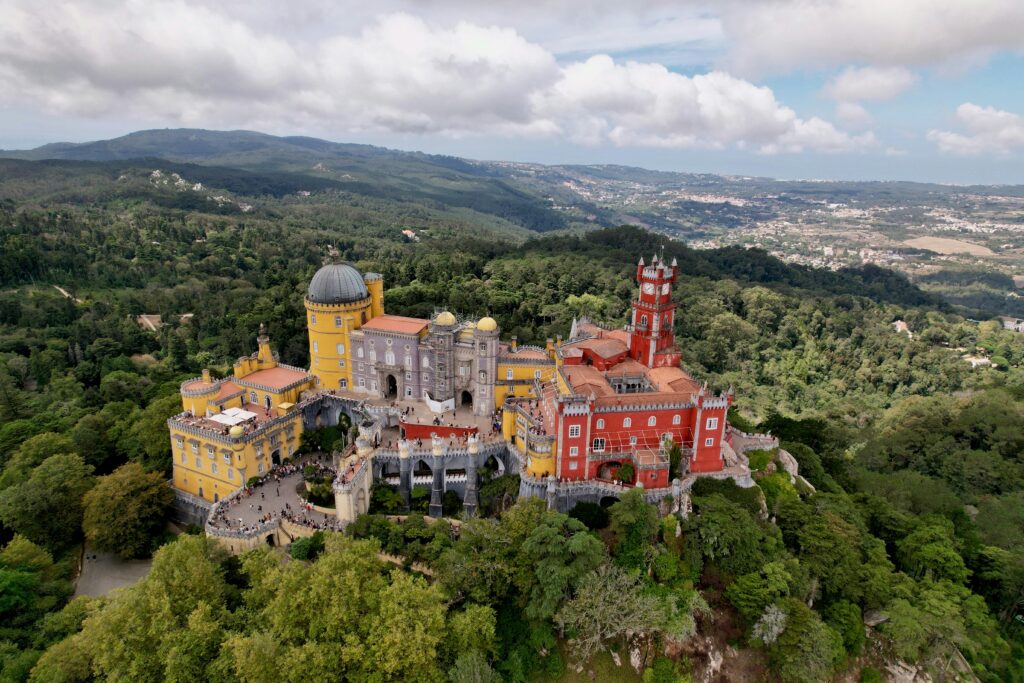
And if you’re out this way, you can easily add a trip to Sintra to your Lisbon itinerary. This charming town tucked into the hills just outside Lisbon is one of the most popular day trips from the city, and it’s easy to see why. Sintra is known for its colorful palaces, historic castles, lush gardens, and beautiful mountain scenery.
The most famous sights include the Pena Palace, with its brightly colored towers and incredible views, and the Moorish Castle, which winds along the mountain ridge above the town. There’s also the mysterious and elaborate Quinta da Regaleira, known for its gardens, underground tunnels, and famous Initiation Well.
We didn’t have enough time to fit Sintra into our last trip to Lisbon, so this one is still on our list for a future visit. If you have an extra day in Lisbon, though, Sintra is definitely worth considering.
Tuk-Tuk Tour
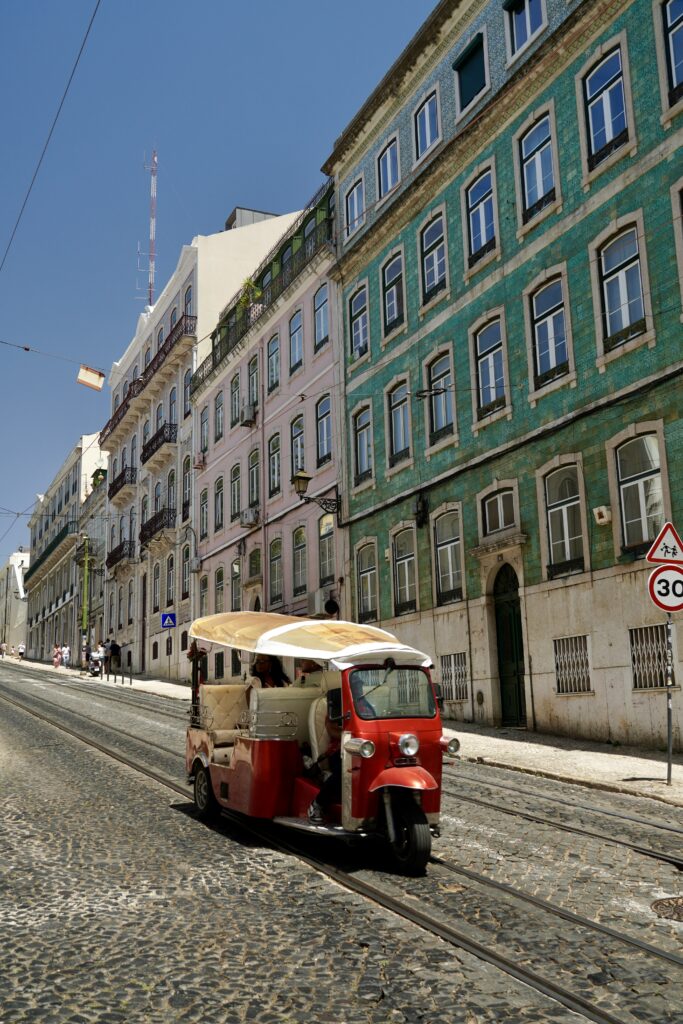
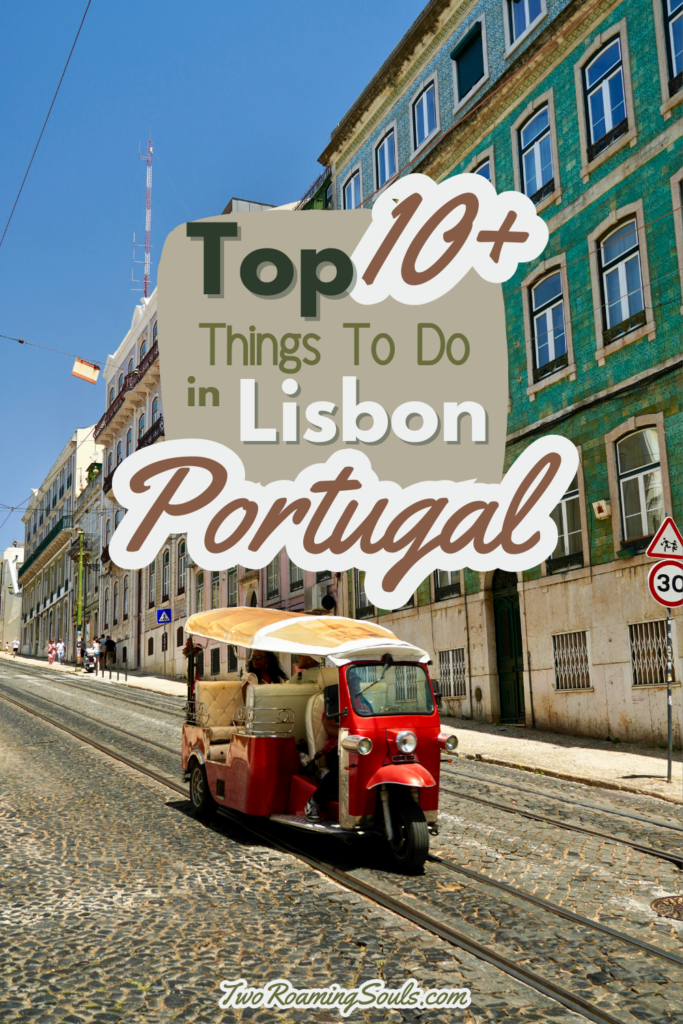
If you’re getting tired of climbing all the hills around Lisbon, hopping in a tuk-tuk can be a fun way to explore the city without wearing yourself out. Tuk-tuks are a popular way to get around Lisbon’s steep and narrow streets, and many tours combine transportation with sightseeing.
Most guided tours come with narration from a local driver and take you past some of Lisbon’s most notable landmarks and viewpoints. It’s a great option if you want to see a lot of the city in a relatively short amount of time, especially if your legs could use a break.
You can also use tuk-tuks more like a taxi to get from one part of the city to another. So whether you want a full sightseeing tour or simply a ride up one of Lisbon’s many hills, it’s a unique way to get around.
Helpful Map Of The Best Things To Do In Lisbon
Use this helpful map below to see where all the top things to do in Lisbon, Portugal are located.
Where To Stay In Lisbon
Lisbon has quite a few great neighborhoods to stay in, and each one has a slightly different feel. Baixa is the flat, central heart of the city and is great for first-time visitors. Chiado is a little more charming and upscale, with tons of restaurants, shops, and cafés, and is our personal favorite. Alfama is where you’ll find the narrow, winding streets and classic old-Lisbon atmosphere, while Bairro Alto is best if you want to be right in the middle of the nightlife. If you want somewhere a little quieter, Principe Real is another great option with a more local, trendy feel.
Here are a few places we’d consider in different price ranges:
- Lost Inn Lisbon – Best Hostel: Located in Chiado, this highly rated hostel is a great affordable option for solo travelers or anyone who wants a social atmosphere. They offer both dorms and private rooms, and the location makes it easy to explore the city on foot.
- Be Poet Baixa Hotel – Best Budget Hotel: Right on Rua Augusta in the heart of Baixa, this small hotel is a great choice if you want to stay somewhere central without spending a fortune.
- Dream Chiado – Best Budget Stay in Chiado: If you prefer Chiado, these apartment-style studios give you a little more space and the convenience of a kitchenette, all in a very central location.
- Lisboa Pessoa Hotel – Best Mid-Range: This stylish hotel in Chiado has a fantastic location, a rooftop restaurant with city views, and even an on-site spa and pool.
- Torel Palace Lisbon – Best Luxury Stay: For a splurge, this beautiful boutique hotel sits on one of Lisbon’s hills and combines historic charm with elegant rooms, terraces, and pools.
Our pick: If it’s your first time in Lisbon, we’d personally stay in Chiado. It’s incredibly walkable, close to many of the city’s top attractions, and has a great mix of restaurants, cafés, shops, and nightlife without feeling quite as hectic as Bairro Alto.
Watch Our Lisbon, Portugal Guide On Youtube
Save This Post For Later