Porto is a beautiful city in northern Portugal and a spectacular travel destination, with a historic city center, colorful houses dotting the hills, and so much food and wine culture.
This area at the mouth of the Douro River, has been a strategic site of human settlement for over 1000 years. Once a prolific maritime trade port, Porto is steeped in history, with tons of beautiful architecture.
And there’s just something about the hilly terrain and colorful buildings that is so memorable. I don’t know if something can be gritty and cute at the same time, but Porto somehow pulls it off. It’s a little rough around the edges, but charming as well.
And for us, it felt like the perfect size for exploring on foot. Well, as long as you are ready for some hills. But hey, you gotta work off that food and wine somehow.
So let’s dive into the best things to do in Porto, Portugal.
This post may contain affiliate links. Disclosure policy.
Walk Along The Waterfront
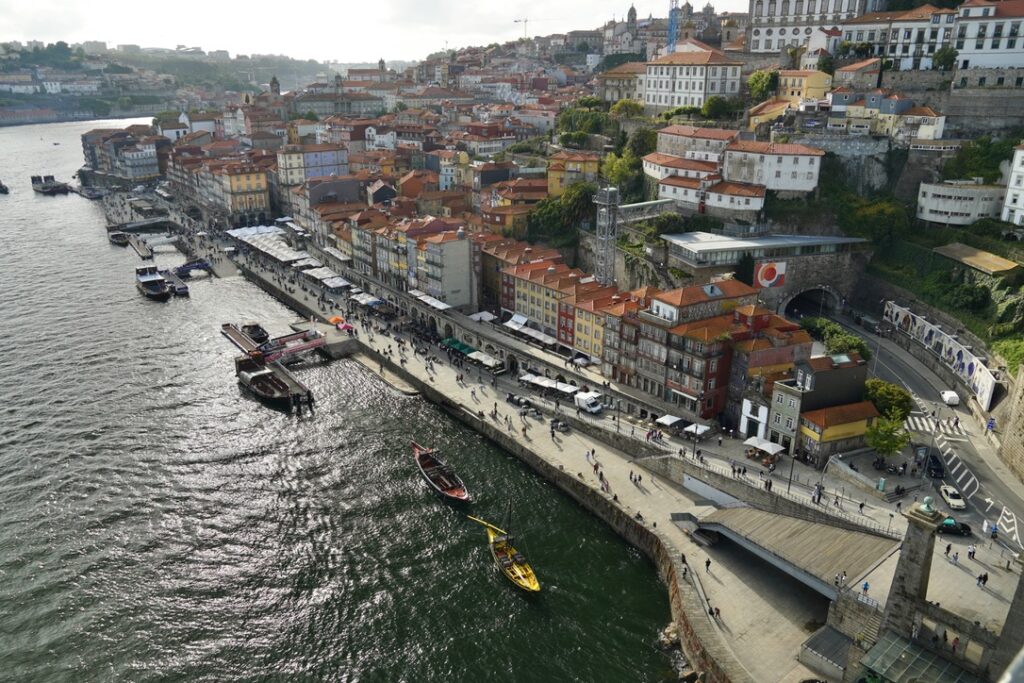
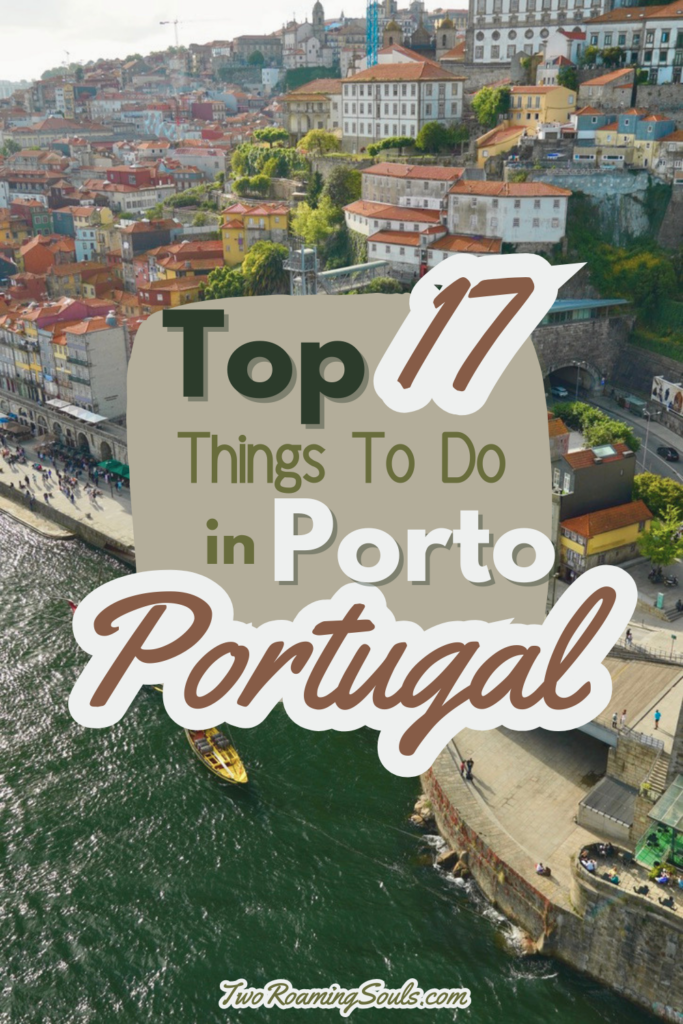
Porto’s historic waterfront is one of the most beautiful places to explore in the city.
It’s where the Douro River connects to the Atlantic Ocean, and that geographic advantage has made Porto one of Europe’s most storied and prolific maritime ports. I mean, the city’s name is literally just port.
You have Porto on one side and Gaia on the other, but both sides are worth exploring. And honestly, being on the Gaia side, looking back at Porto is arguably the more scenic experience.
Gaia is known historically as the place for storage and handing of trade goods. Especially wine cellars for one of Portugal’s most famous exports, Port Wine. For hundreds of years, barrels of wine have been transported down the Douro River and aged in these cellars. So wine tours and tastings are a very popular thing to do over here.
Today, the waterfront is a very touristy area that still carries reminders of the cities history. It’s just a such a cool place to explore, with every step giving a new angle to appreciate. There’s tons of restaurants, shops, street performers, and more.
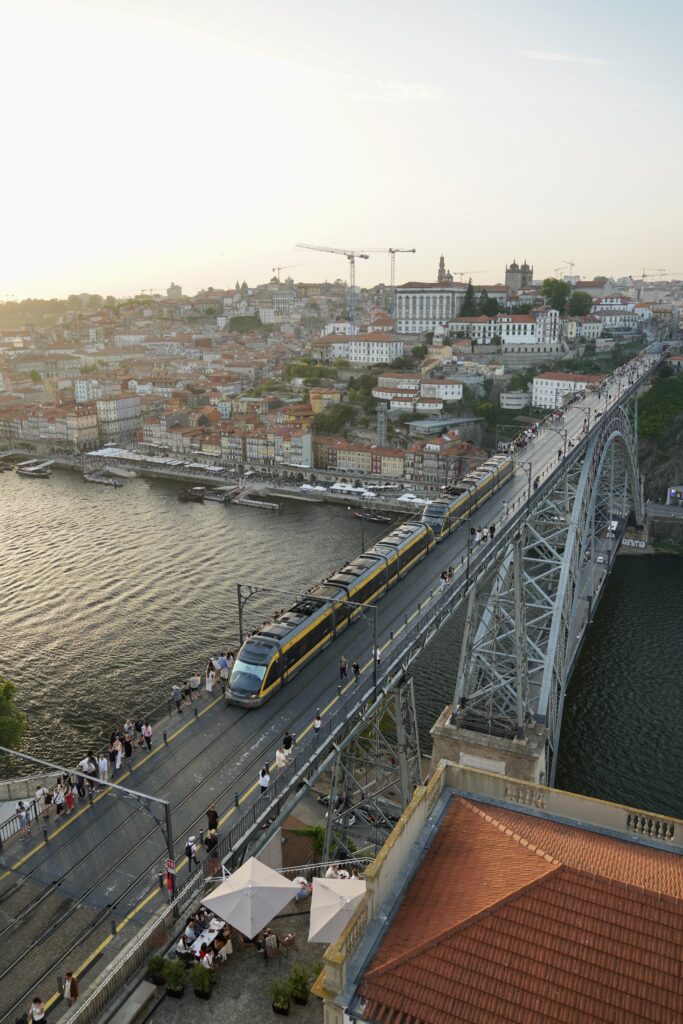
To get to Gaia, we definitely recommend walking across the Dom Luis The First Bridge. It’s a double decker, so you can cross on either level, but personally the upper level has better views and more space for walking (well, of course just watch out for the occasional passing train).
All the walking around Porto’s hills can get you pretty tired. But luckily the waterfront area has two things to help you out. On the Gaia side, there’s the Gaia Cable Car, and on the Porto side, the Funicular. Both of them are pretty cheap to ride, and taking them from bottom to top is what we recommend to save yourself some energy. But neither really gives you that much better views than you can get just exploring on foot.
Another popular thing to do here is a ferry across the river or boat tours. We did the 6 Bridges Tour which takes you up and down the river for an hour, and got to see more of the waterfront area, but honestly it was little boring. Maybe this sunset cruise with some drinks would have been a better choice for us.
But we already had something picked out for sunset, and it’s the next thing on our list.
Sunset at Jardim do Morro
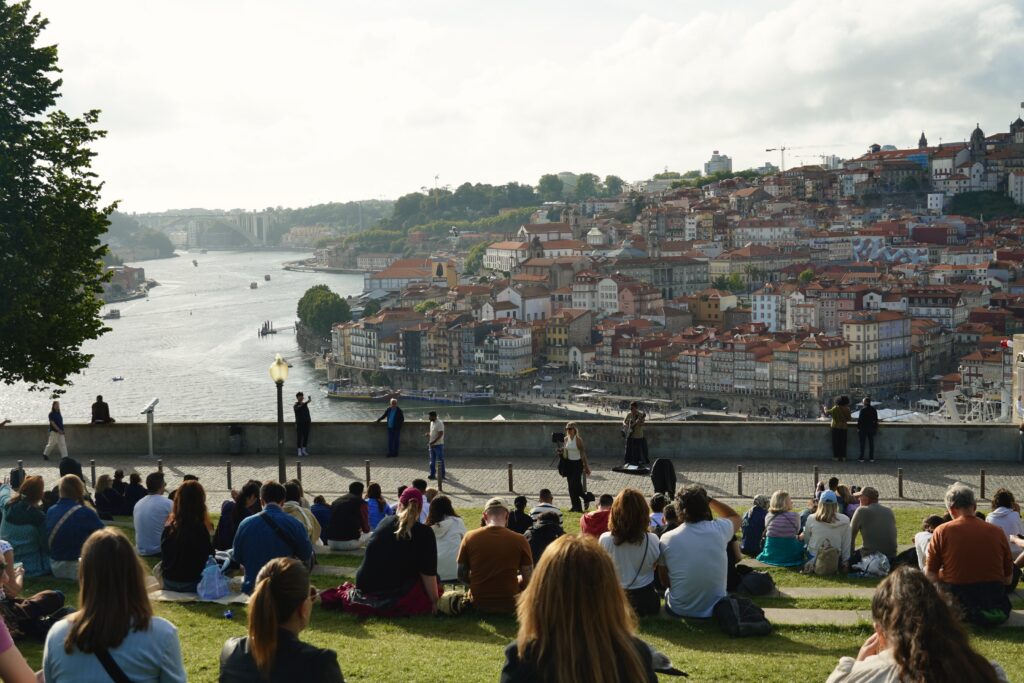
This park in Gaia is the absolute best place in town to watch the sunset. Plus it’s free.
It’s perched above the waterfront, and just has the most chill vibes for sunset. Loads of people show up everyday to sit on the lawn and bask in the golden rays. You get an incredible view of Porto’s historic skyline, and a glowing Douro River winding its way through.
The top deck of the bridge is the easiest way to get there.
There’s usually musicians to set the vibe, and the Jardim Do Morro Restaurant has a walk up bar outside to sell drinks. We also sat at the restaurant for a couple, but if you can’t get a seat in the front, you’re better off just enjoying the views from outside and getting dinner elsewhere because it’s kind of pricey.
And one other place you can check out is the viewpoint at the Monastery, Serra do Pilar. This historic landmark was under renovation during our visit. But even without being able to go inside, it’s still worth it to come up here for arguably the best view of Porto and Gaia. Being up above the train tracks over the bridge is just such a cool spot. But just know that there’s fewer places to sit to watch the sunset.
Porto Food Tour
Portugal has a bunch of local delicacies that you simply must try on your visit. And this tour was a great way to pack so much experience into one day, and a good rainy day activity too! We popped around the city to some local spots, markets, and specialty shops. And it’s just a much a drinking tour as it is a food tour.
Our tour guide Alice was excellent. Just so friendly and down to earth. She helped us understand the significance behind all the foods and drinks we tried. Plus other relevant city history as we explored. And for a group of 10 people, the experience was surprisingly smooth going around the city and getting served quickly.
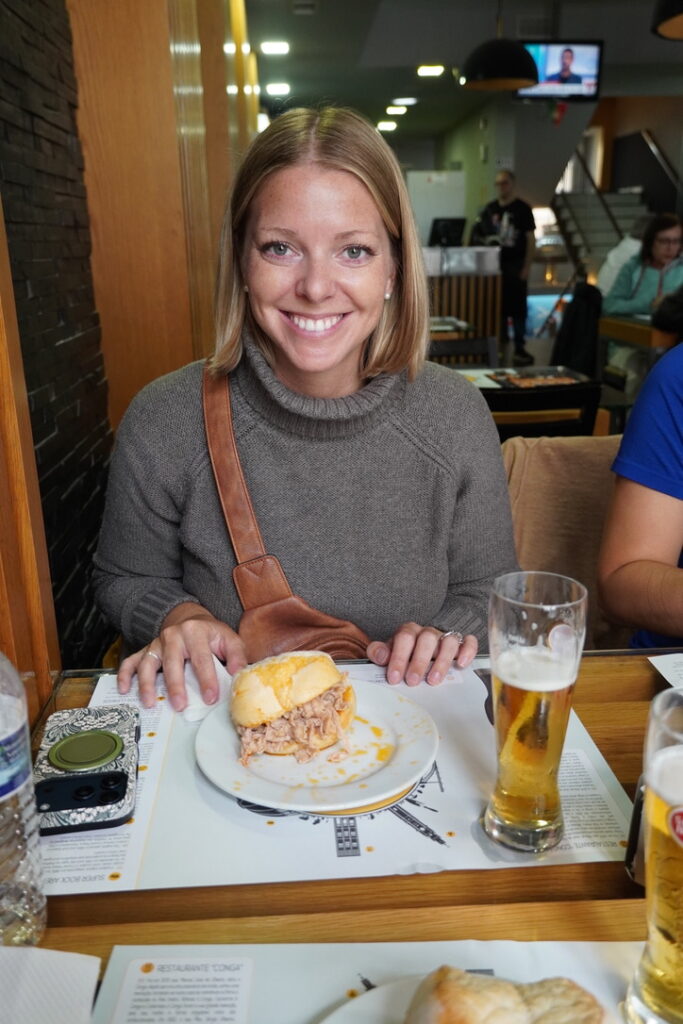
First stop on the food tour, we stopped in for a Bifana and a beer. This is a succulent spicy pork sandwich and is just so mouthwatering. The meat is slow cooked in garlic and wine, and a little extra juice on the plate is just part of the experience.
Next stop, Mercado do Bolhão. This massive open-air market is a great hub for all kinds of iconic Portuguese food and drink. And we probably would have had it on the list by itself if it wasn’t part of this section. It’s been a part of Porto for over 100 years, but admittedly the most recent renovation turned it into more of a tourist hotspot than a local market. But our guide says she still comes here for unique specialty items. There’s mostly food on the first level, shopping on the second level, and restaurants and shops around the outside.
To pair with our first bites, we got some Vinho Verde. It’s a young white wine known as a cold and refreshing summer wine. And it’s grown extensively just up the river from here.
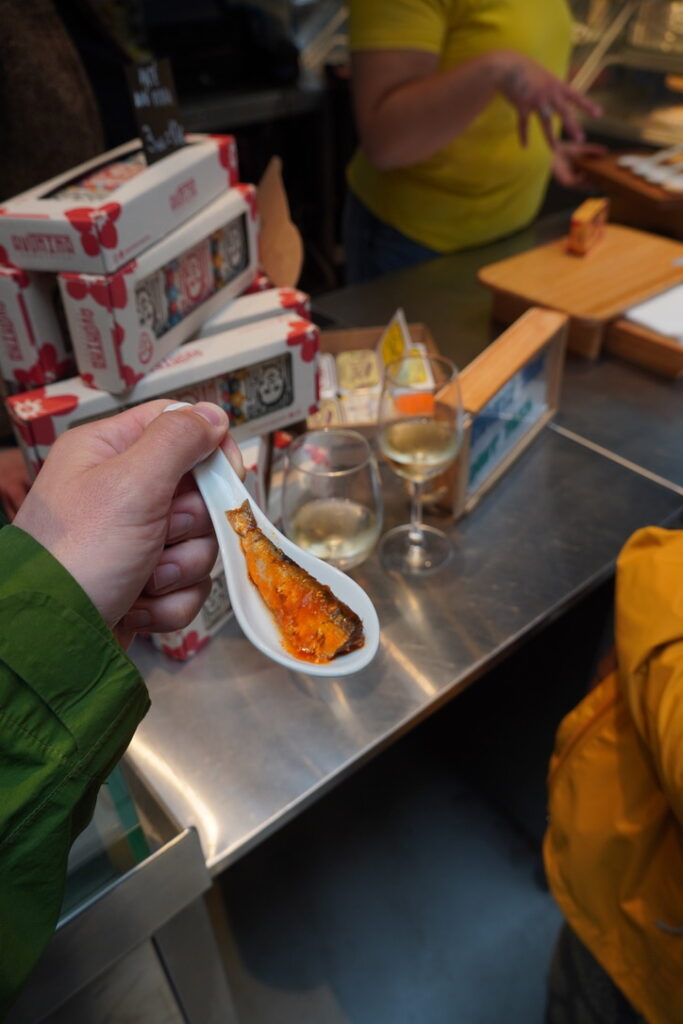
Next up, canned sardines, which apparently are a huge deal in Portugal. We learned how the Portuguese made big money selling them as military rations to both sides during WWI and WWII. But they fell out of favor with the Portuguese, viewed as mere wartime rations. So some clever rebranding has turned that boring metal tin into a colorful and exciting delicacy. But as much as we love the packaging, I think sardines are an acquired taste, that we’ve… yet to acquire. But you can now find all kinds of canned specialties, like cod, tuna, lobster, shrimp, and more.
Then we were served some red table wine from the Douro Valley, Portugal’s most famous wine region. But we will talk a lot more about wines later in this guide, when we go there in person.
Then we tried some delicious cheeses and cured meats, which become one of our favorite light snacks to order when out exploring Portugal.
And to cap it off with something sweet, we tried some Ginja. A cherry liqueur traditionally served in chocolate cups. Yum!
Next up, Portugal’s most famous pastry, the Pastel de Nata. This delicious treat has an egg custard surrounded by flaky crust. I’m not a big custard guy, but these things are so delicious, I was eating them all the time on our trip. Two of the most famous places to get them are Manteigaria and Castro, but you can find them basically everywhere around Portugal.
Then we went to another local restaurant and had more wines and some cod fritters.
And finally finished at a Portuguese specialty shop. It had a cool variety of Portuguese delicacies, like cod, cured meats, sardines, and tons of Port Wine. This sweet aperitif is one of Portugals most famous exports, and quite literally named after this city. It’s sweet, aromatic, and potent wine that we had it paired with fig and walnut. They had a bottle of Port in here from 1884, crazy!
I always recommend doing food tours right at the beginning of your trip, so the rest of your time, you’re much better prepared to continue exploring the local cuisine.
🍽️ ➡️ Book This Same Food Tour We Booked!
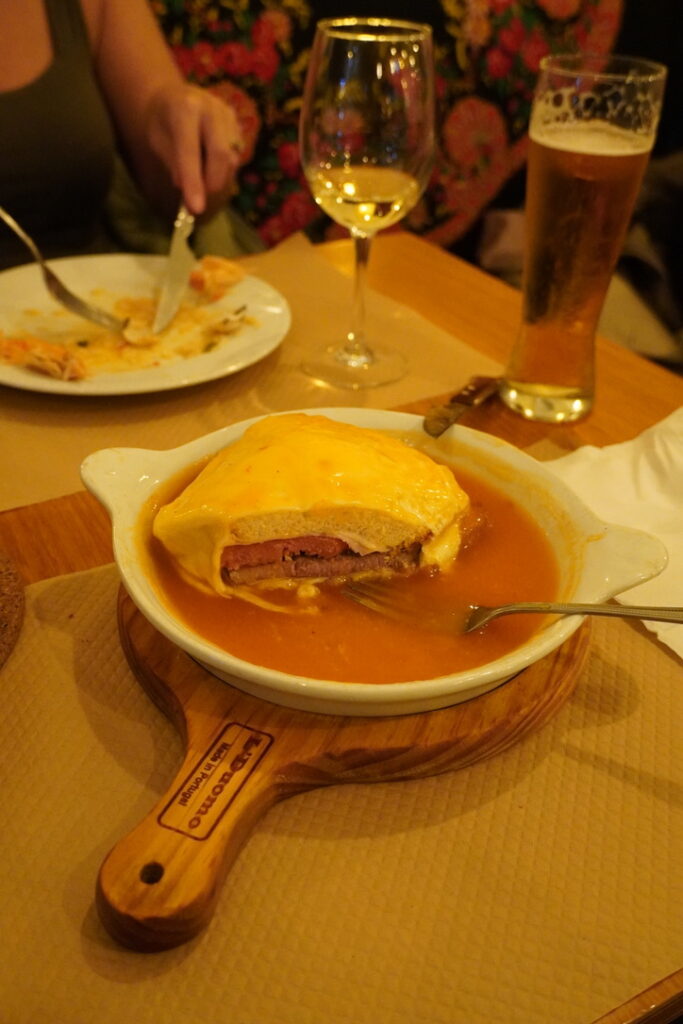
There are two other Portuguese classics that we didn’t get on the tour that we just have to mention.
The first is the Francesinha, a diabolical sandwich that has layers of different meats, covered in a blanket of melted cheese, and all smothered in a rich tomato and beer sauce. So you gotta try one of these as well. They are pretty easy to find around town, but our favorite was at a place called Bulha.
And the other Portuguese classic is a Prego. A garlicky steak sandwich that is just so good. It’s not necessarily a Porto thing, but still highly recommend giving these a try. One place we found an excellent one is at Pregar Baixa. Their’s is like a filet mignon on a sandwich.
Porto Cathedral
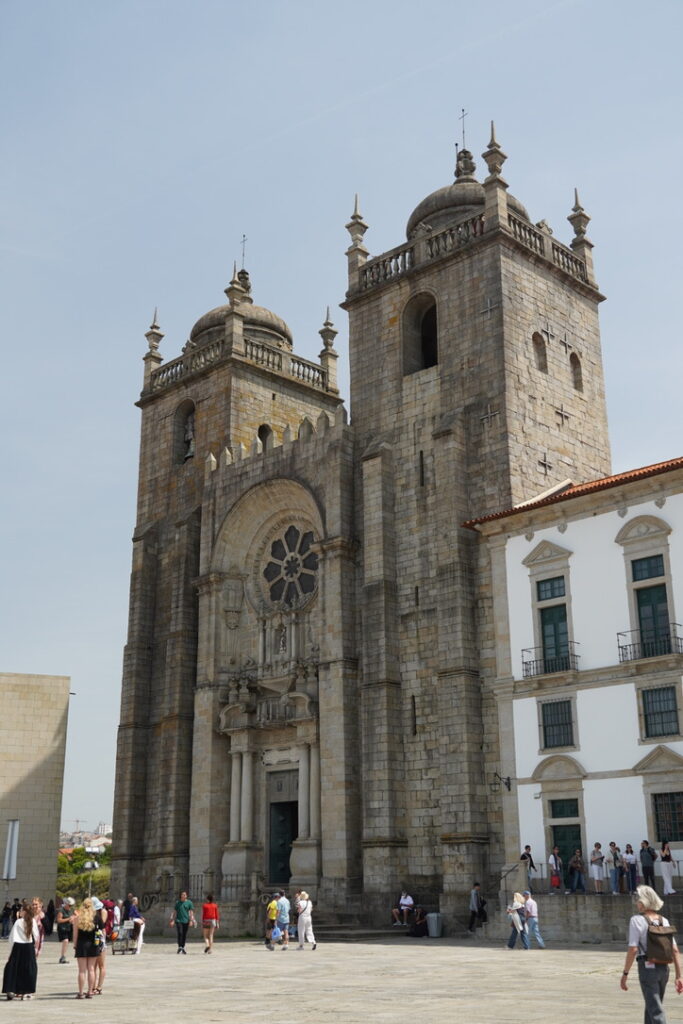
The Porto Cathedral is one of Porto’s oldest historic buildings, and you can buy a combo ticket to explore the Bishops Palace right next door.
We checked out A LOT of the historic buildings in Porto, and if you are only going to visit one site, this is the spot to choose.
The Porto Cathedral is a Roman Catholic Church located just above the waterfront that dates back to the 12th century. Reflecting its long history, it now features a blend of architecture from various periods like Romanesque, Gothic, and Baroque styles.
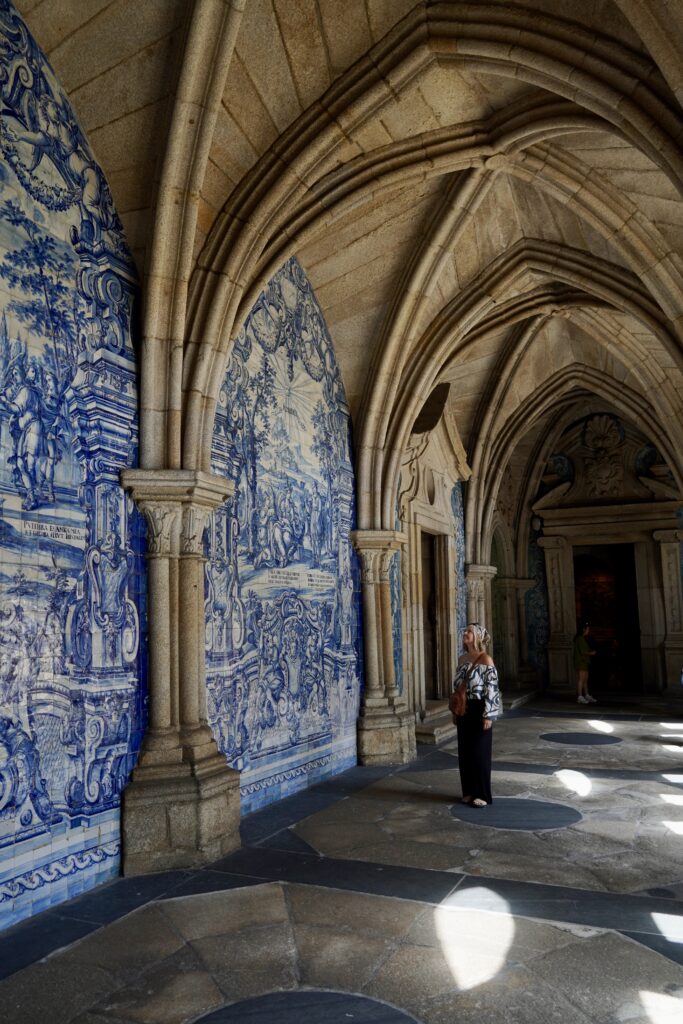
The church itself has impressive stone pillars and beautiful stained glass. But my favorite part is the cloister with the contrast between the stone archways and beautiful blue ceramic murals. And lastly, you can climb the tower for great views of the city.
But as one of the most popular historical sites in Porto, it can get busy. So try going early or late to avoid the crowds for a more pleasant and relaxed experience.
Bishops Palace
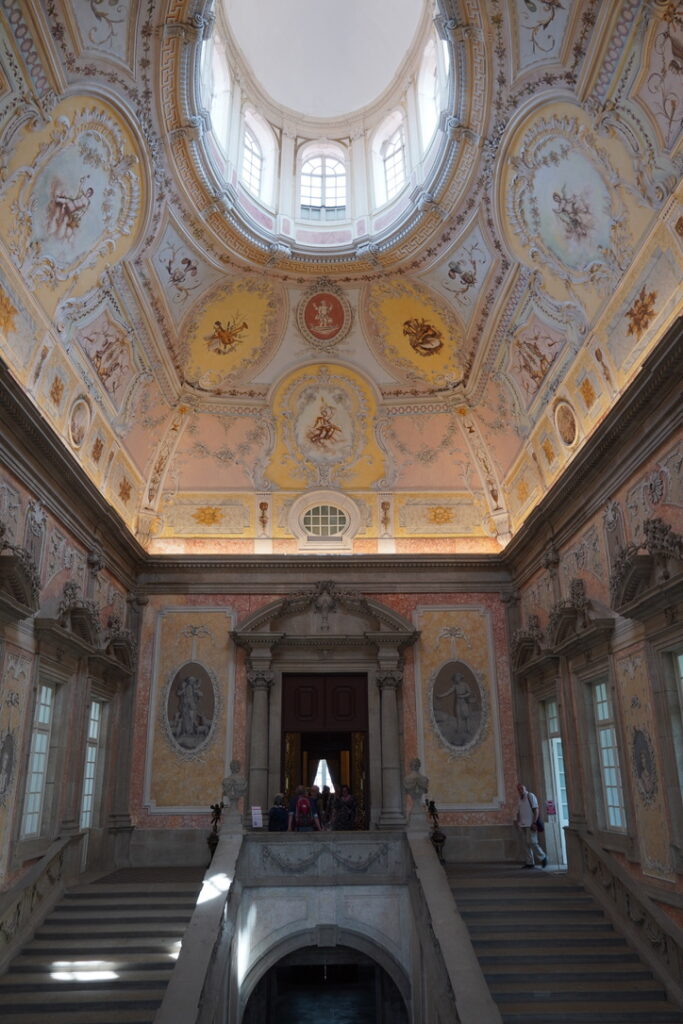
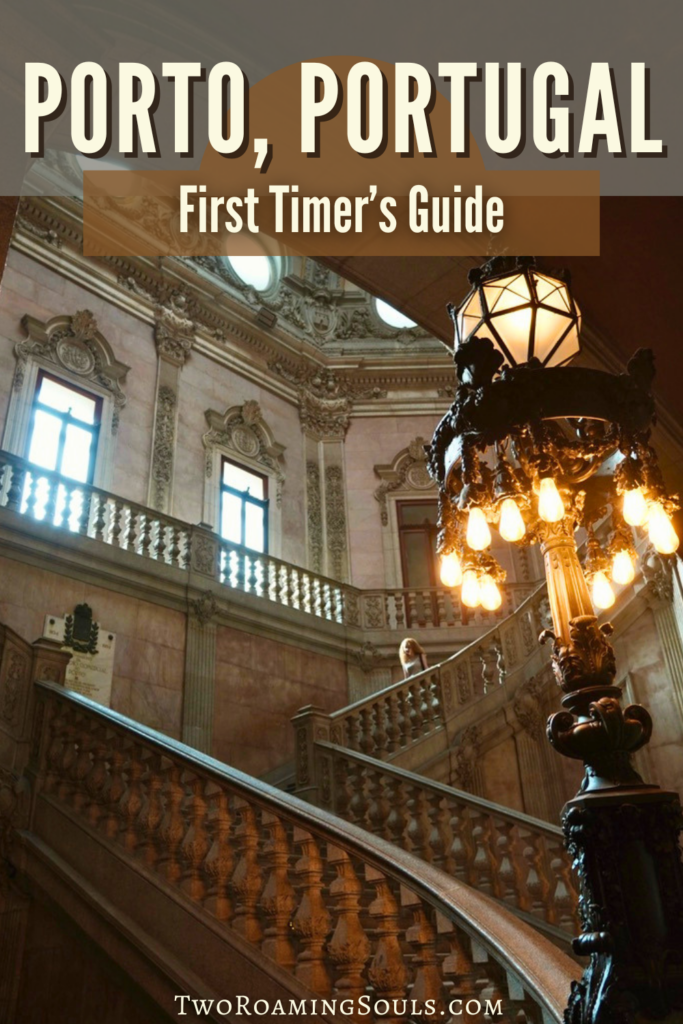
Right next to the Porto Cathedral is the Bishops Palace, or Episcopal Palace. This stunning mansion is a worthy addition, but the two main highlights here for us, are the grand staircase entryway and the views over the river, which were arguably even better than the church tower.
And this staircase entrance room is simply jaw dropping. I love the pink and yellow tones glowing with natural light. The whole room just has a calming pastel glow to it.
Clérigos Church and Tower
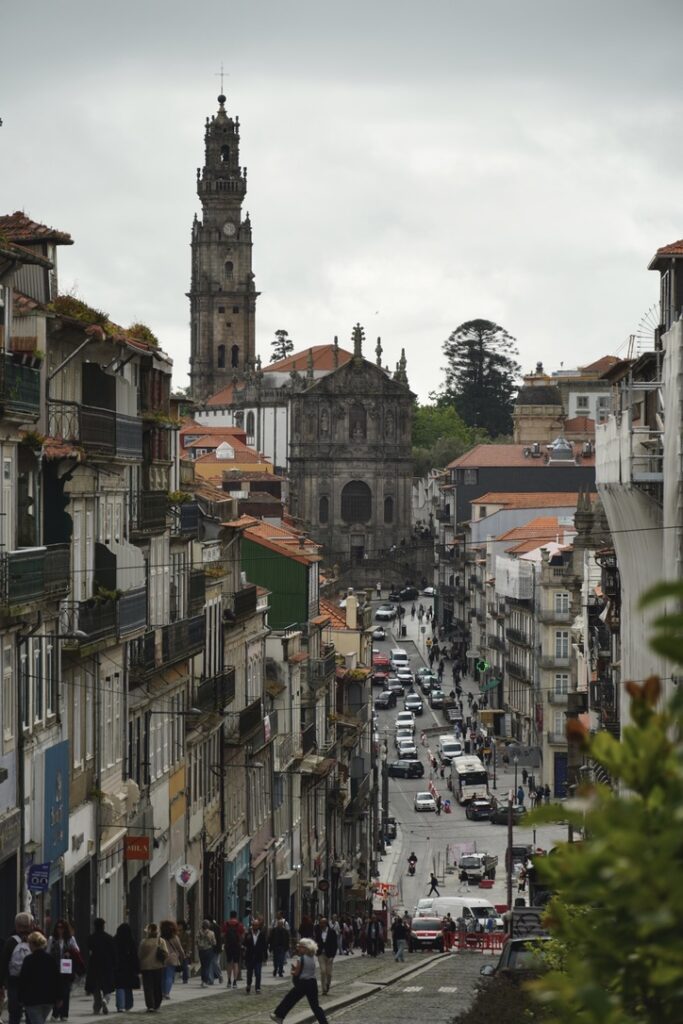
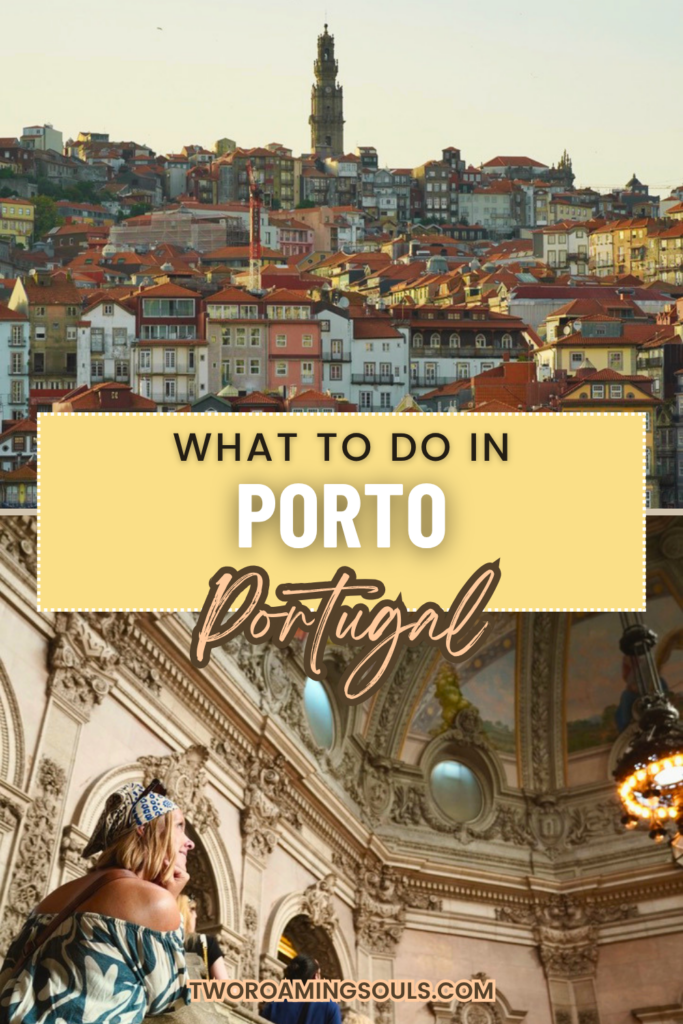
If you want to add more historic buildings to your itinerary, definitely check this one out. Admittedly, we didn’t find the church interior itself really that impressive, but the imposing building stands proud at the top of this hill, and it’s tower is the tallest building in the city and offers by far the best 360 views in Porto. But get ready for a lot of stairs.
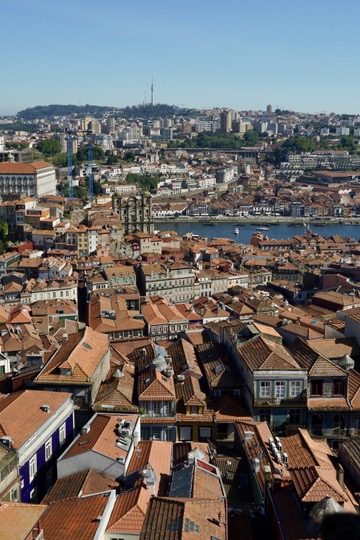
When you reach the top, you can admire views in all directions. Looking out to the Atlantic Ocean, the riverfront area, and spotting other notable Porto landmarks. And I just love seeing all the layers of red roofs and cute buildings below.
But the thing that really put this experience over the top for us was the Spiritus light show. If they are still hosting this show when you visit, you have to go! It’s a 30-minute multimedia installation that is simply transcendent!
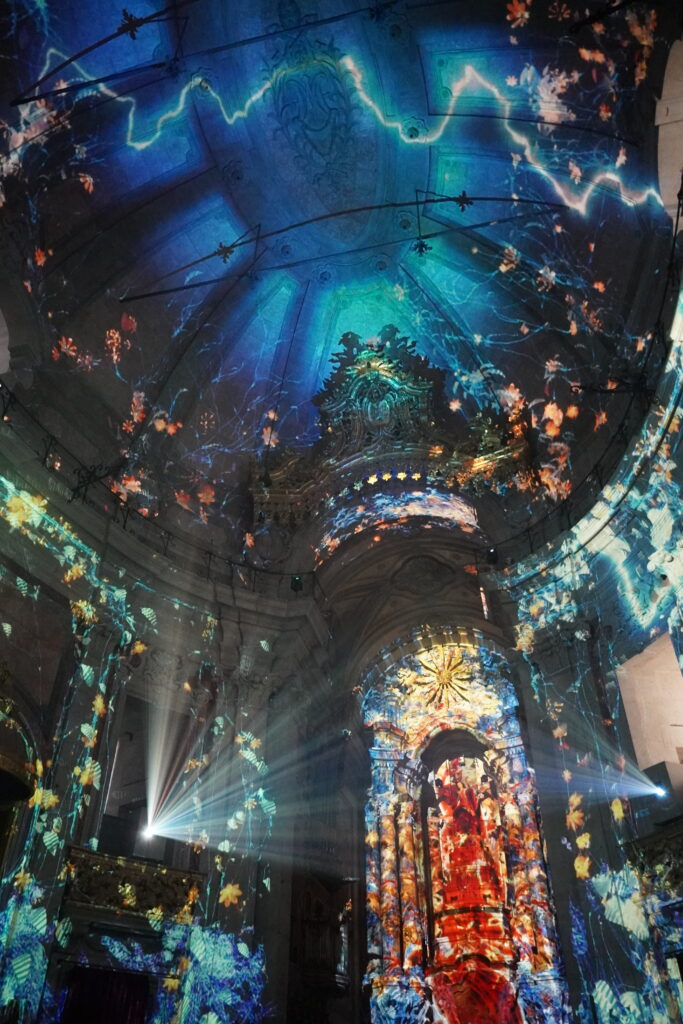
With lights, visual projections, and a specially composed soundtrack, it just takes you on an unforgettable sensory journey.
And they really map the visuals perfectly to the architecture of the church, turning this static historic building into a living and breathing display of color and emotion. They have several showtimes throughout the evening, and I recommend showing up early to get a seat in the back. Trust me, your neck will thank me.
Douro Valley Wine Tour
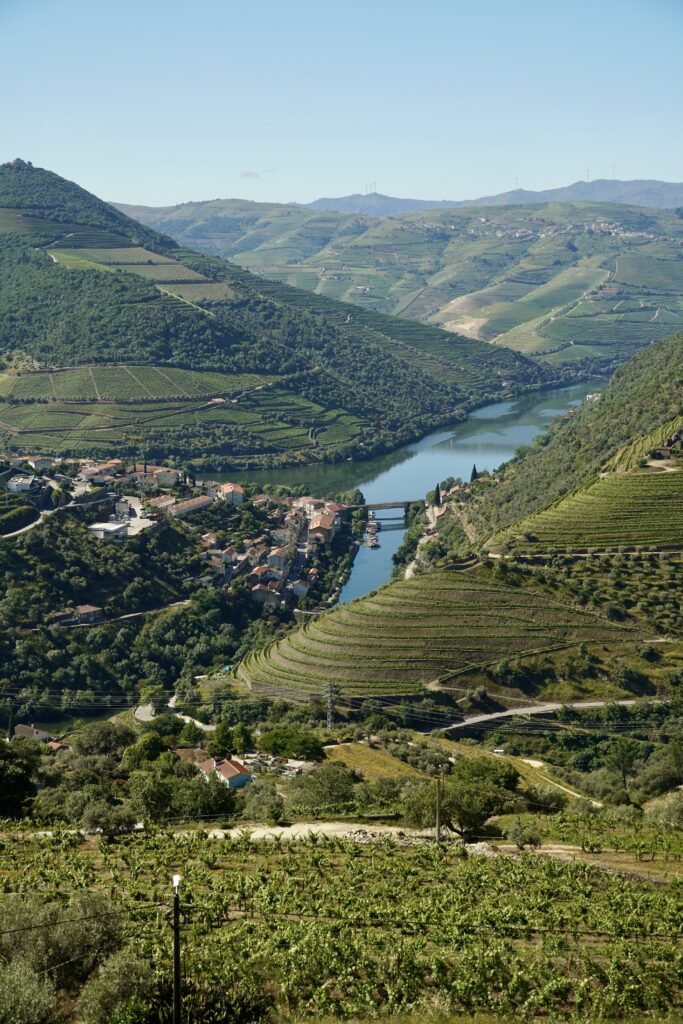
Taking a wine tour to the Duoro Valley is one of the most memorable day trips from Porto. There are various tours you can take to explore the beautiful vineyards of Portugal’s most famous wine country.
The tour we took has a little bit of everything, a van ride to and from Porto, plus a boat ride and train ride along the Douro River.
First we got picked up right in Porto. And admittedly the worst part of these tours is that it’s just a long drive. It’s about an hour and a hour drive to the Douro Valley. Oh and if you get carsick, you might want to take some medication because the roads once you get to Douro Valley are very windy.
But luckily our guide Carlos was an excellent host. He was such a passionate tour guide, and honestly really just an incredible ambassador of Portugal. Seriously, he was practically convincing the whole group to move here.
On the drive, he shared some history and information along the way that helped pass the time.
Before you reach the Douro Valley, you pass an area known for Vinho Verde. That refreshing summer white we had on the food tour.
Then, you climb up the mountains and through a tunnel to the other side. The climate on the other side is drastically different from the coastal side, and creates that perfect climate and soil for the legendary Douro Valley wines.
The first stop of the trip is a winery tour at a local vineyard. Here, you learn about the wine growing process and of course taste some delicious wines.
Then you head down to the river for a boat cruise and sip on some sparkling wine.
Next, we got lunch at a local restaurant and lastly, took a train ride along the Douro River. The views here were just mesmerizing.
My only complaint about this day-tour was wanting to spend more time in this special place.
🍷 ➡️ Book The Same Douro Valley Wine Tour We Booked
São Bento Station
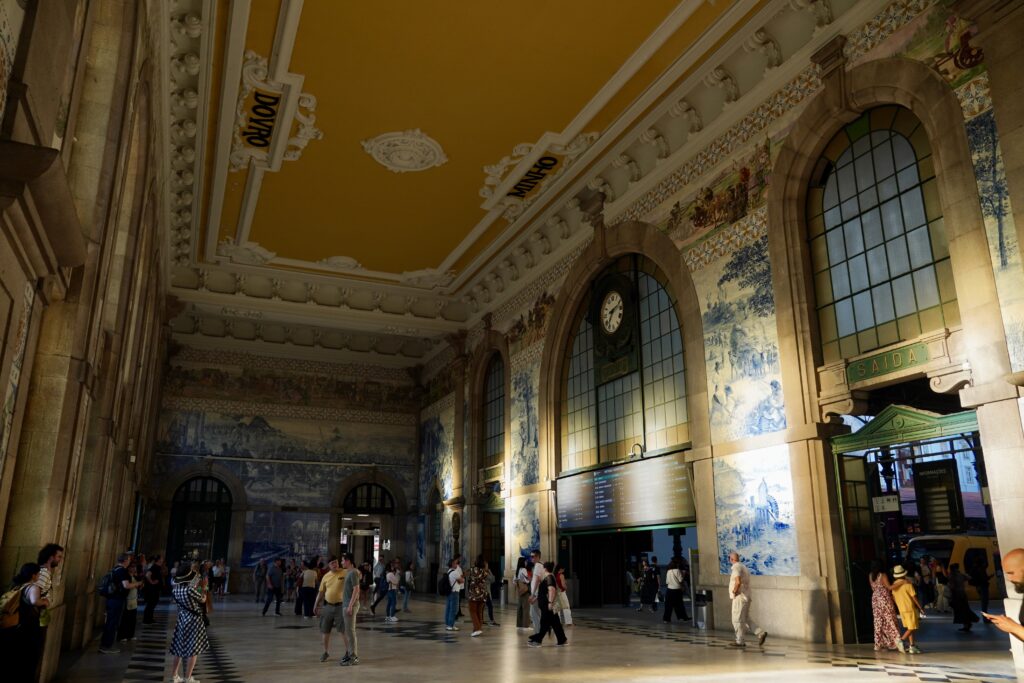
This is a quick and easy stop to add to your list. And free to visit. São Bento Station is an active train station, but also one of the most beautiful buildings in Porto.
It’s one of the best examples of those iconic blue ceramic tiles, or azulejos. The murals depict various moments in Portugals history, turning the train station into a kind of living free museum.
The murals tell stories of Portuguese royalty, daily life, and famous battles.
Though admittedly, this is one time where having a guide to explain the stories behind each mural would help give them more context. But this site is certainly on most of the walking tours of the city.
I love how the natural light pours in the windows in the afternoon, giving a warm glow to the whole interior.
So when you are exploring the city, put it on your list to pop inside for a minute and admire.
And as a popular attraction and active train terminal, avoid the middle of the day if you want a less busy experience. It is open 24 hours a day.
Palácio Da Bolsa
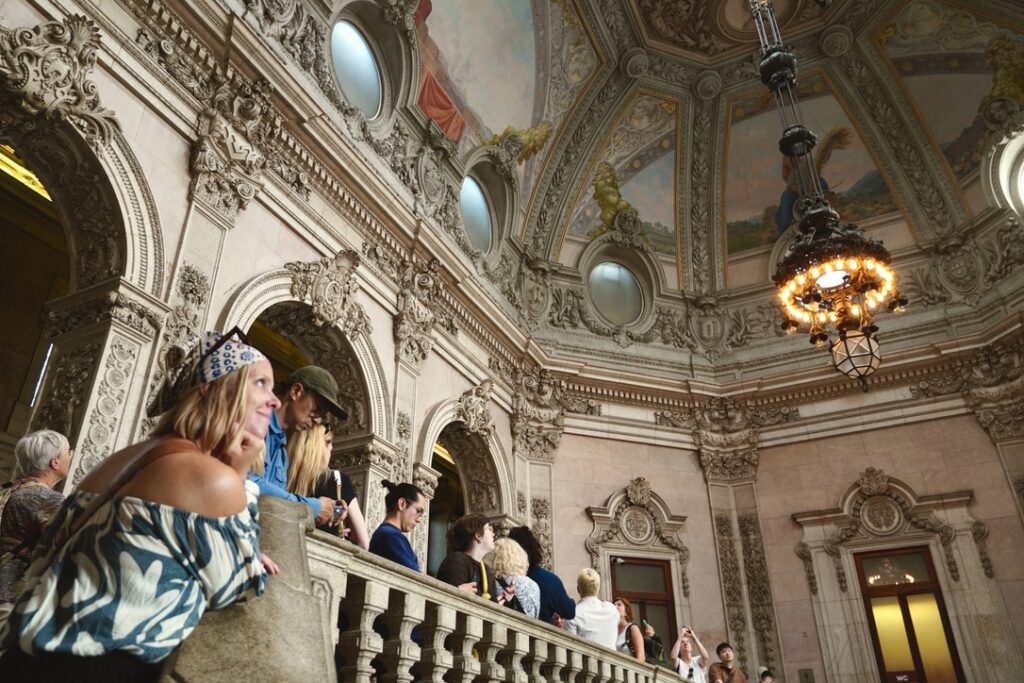
This is another one of Porto’s most historic and beautiful buildings. Built in the Neoclassical style as a stock exchange and headquarters for the Commercial Association of Porto. The building is only accessible through guided tours.
The 30-minute guided tour is offered in 4 languages daily: Portuguese, Spanish, French, and English. And it costs 14€ for adults.
We tried to book a tour online but could not seem to get the website to work or weren’t sure if they were just all sold out. But when we visited in person, we had no trouble booking a same-day tour in person.
The building is still used for some meetings by the Commercial Association, but these days is mostly unoccupied and preserved for its historic significance.
The mandatory tour was helpful for learning the history and significance behind each room. But personally the guided tour felt a little rushed, with the guide even giving attitude to a group for not moving between rooms quickly enough. So, don’t expect to sit and admire each room like you’d probably like too.
The tour features various impressive rooms with impeccable details to admire. But the real highlight for everyone has to be the Arabian room. It’s just a dazzling space with glowing gold details carved into every surface. If their goal was to impress potential business partners, well then, mission accomplished. It’s just incredible.
And just around the corner is the Church of São Francisco. We regret not actually going inside this one, because the opulent gold interior is said to be incredible as well. So be sure to pop into this church afterwards, if you don’t have church fatigue yet!
Livraria Lello
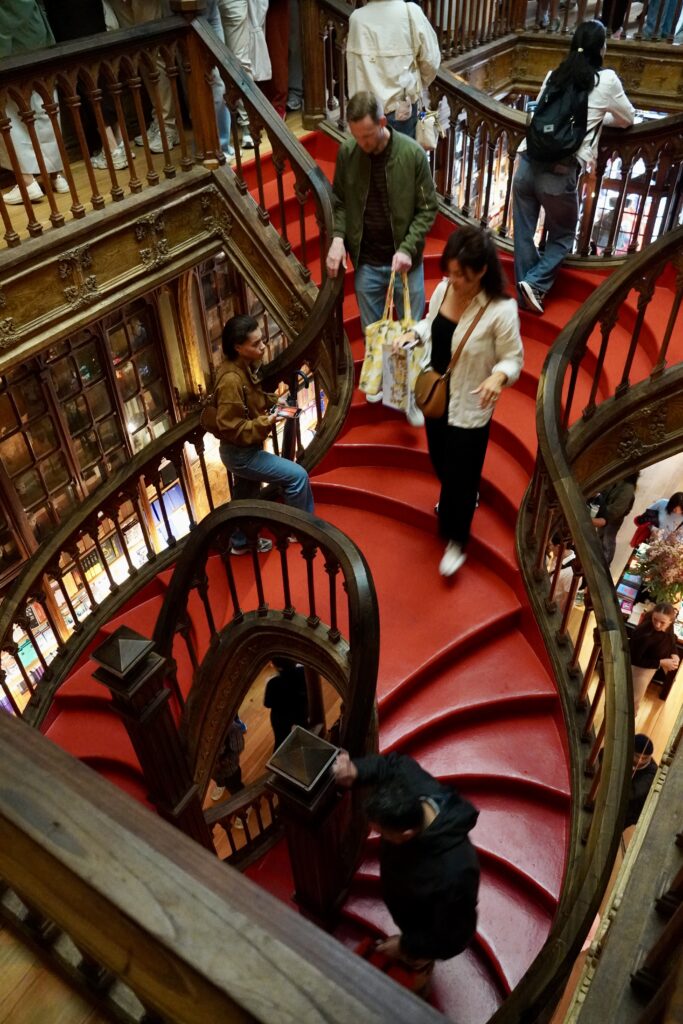
This over 100 year old space is the self-proclaimed world’s most beautiful bookstore. And when you step inside, you’ll quickly see why.
Beautiful woodwork details, an enticing curved staircase, gorgeous stained glass ceiling and other details to admire.
It’s rumored to be the place where J.K. Rowling got inspiration for some parts of Harry Potter. But despite living in Porto in the 1990’s, Rowling has denied the rumor.
But honestly, it’s too late, the connection has been made. And the bookstore even leans into the lore, selling lot of copies from the Harry Potter series.
And an important thing to know is that visiting here requires paid, timed-entry reservations. Reservations are 12-15€ per person. Which might seem crazy for a bookstore. But it is actually quite a small space, so this helps control crowding somewhat.
But we would argue it’s not enough. Even with a reservation, you’ll still wait in a line out front. And it was simply too crowded inside to be enjoyable, especially with how everyone is basically just trying to take photos and videos. Which, I mean, guilty…..
But I don’t know if other times of day or slow season might be better. But unless you literally get the first time slot at 9am, I think you’re better off trying something later in the day. Because it only takes a single time slot to fill the place.
So all the reasons that make it the most beautiful bookstore in the world, ironically make it actually a terrible book shopping experience.
And its small collection is further divided into several languages, so the actual selection for any given language is quite small.
However, that 12-15€ reservation does however function as a credit to purchase a book. And I was happy to find bunch of pocket-size classics that are great for travel and make a nice keepsake addition to your bookshelf.
The Twin Churches of Carmo and Carmelitas
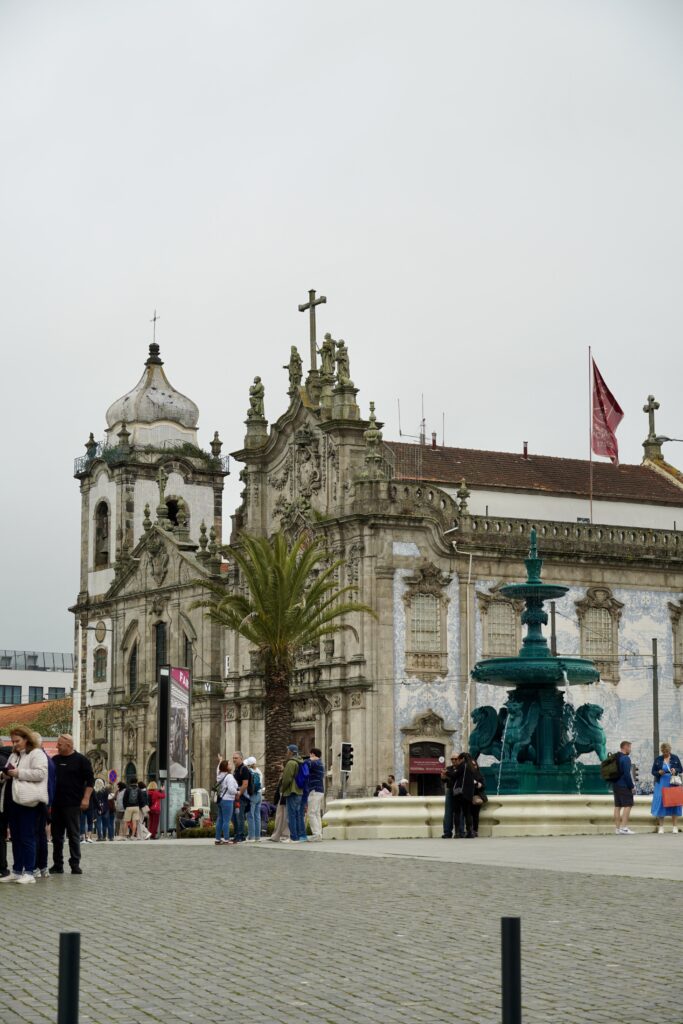
What might appear like one giant church is actually two separate churches connected by a super narrow house in between.
The Carmelitas Church was built first in the mid 17th century for the nuns, and the Carmo Church was built in the 18th century for monks.
And hidden in plain sight is the Casa Escondida, a tiny house wedged right between the two.
Theories abound for why these two churches were built sandwiched together like this, and who occupied this tiny house in between.
They feature architecture and decoration with Baroque and Rococo elements. In addition to more examples of azulejos, those iconic blue tile murals which can be enjoyed without even entering the buildings.
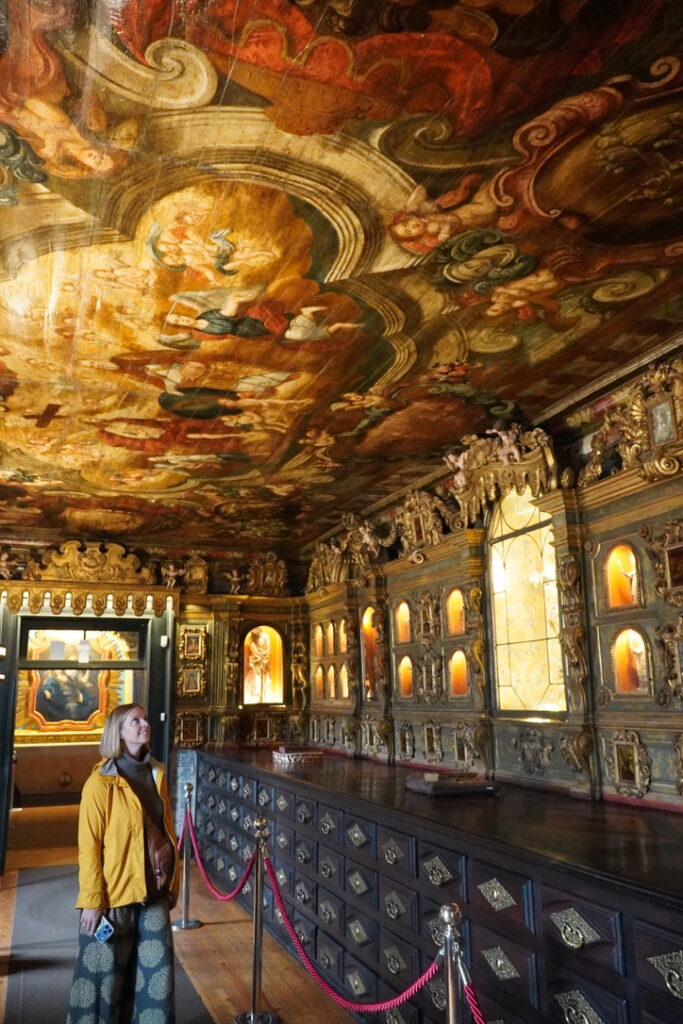
The two churches themselves are free to visit, or it’s 8€ for a ticket to explore the Hidden House and more behind the scenes elements of Carmo Church. Which includes access to old catacombs with an actual mummified sister, various other museum-like ecclesiastical rooms, and the rooftop.
The Hidden House is somewhat plain inside, but it’s unique form and story are really what’s intriguing.
I wouldn’t say that any one single feature here stands out as a must-visit. But it’s the variety of everything together that makes this a worthy stop if you are nearby.
Escada Guindais
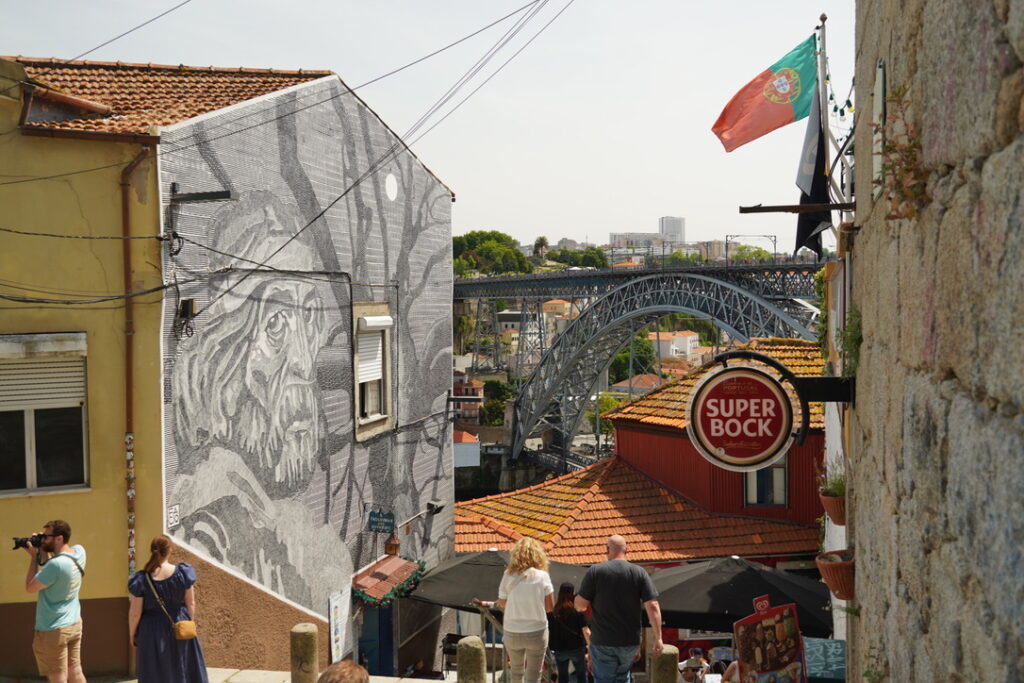
If you’re looking for a quieter side of Porto, take a walk through Escada Guindais, a hilly little neighborhood tucked just beyond the old city walls. The area has a more local, laid-back feel, with colorful street art, winding stairs, and some really cool views looking back toward the Dom Luís I Bridge and the Douro River.
If you’re already tired from Porto’s never-ending hills, you’re in luck, Funicular dos Guindais is right nearby and makes it much easier to get around without tackling another steep climb.
For a break, head into Guindalense Futebol Clube, a casual counter-service sports bar and restaurant. We loved the laid-back atmosphere and especially the outdoor patios, where you can grab a drink or something to eat while enjoying the views. It’s a great little spot to cool off and take a break from sightseeing without feeling like you’re sitting in a touristy restaurant.
Largo da Pena Ventosa
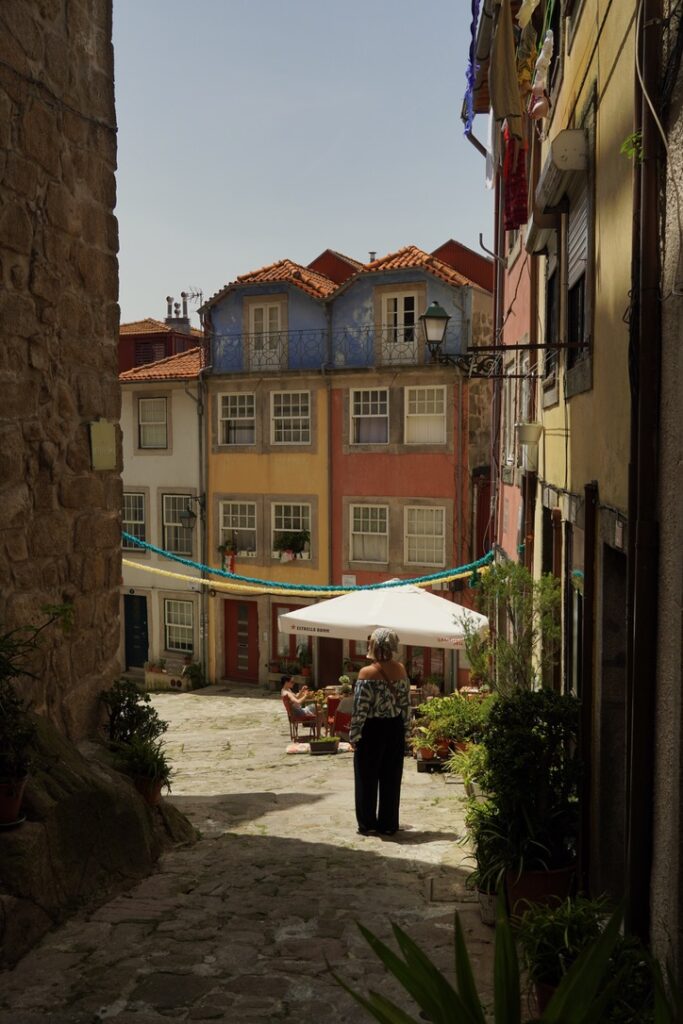
While Porto is full of cute streets and colorful buildings to get lost in, Largo da Pena Ventosa has to be one of the most photogenic little corners of the city. This small square is tucked away among the winding streets of Porto’s historic center, with colorful facades, traditional balconies, and a cozy atmosphere that feels quintessentially Porto.
It’s just a short walk from Porto Cathedral, making it an easy stop to add to your sightseeing route. Take a few minutes to wander around, snap some photos, and soak in the atmosphere before continuing on to the next stop.
Convento Dos Grilos
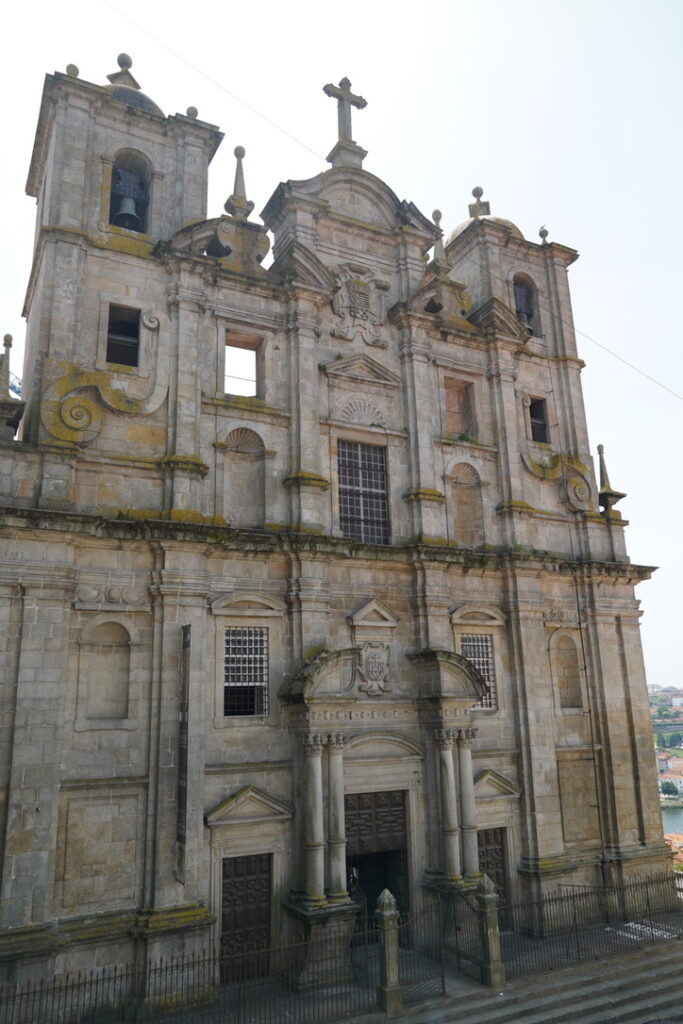
The Convento dos Grilos is another beautiful historic church worth popping into if you have some extra time. You can explore the church and museum before climbing the double towers for a different perspective over Porto.
I’ll be honest, it doesn’t have quite the same “wow factor” as some of the other churches and viewpoints on this list, but that can actually be part of the appeal.
Tickets are only around €4, and when we visited, it was noticeably quieter than many of Porto’s more popular attractions. If you want to see something beautiful without fighting the crowds, this is a nice little hidden gem to add to your itinerary.
Avenida dos Aliados
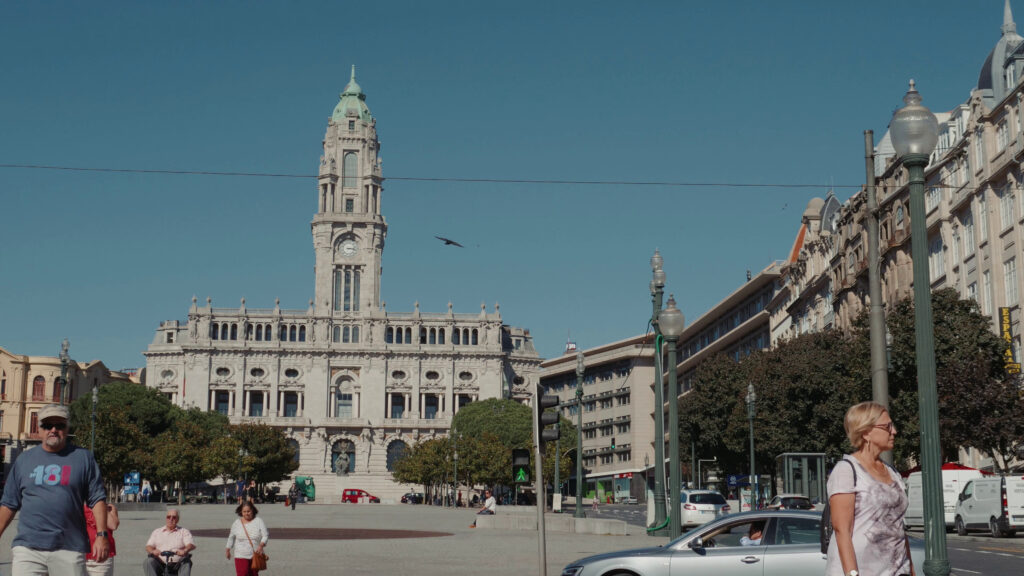
This plaza is the lavish city center of Porto. Lined with impressive Beaux-Arts and Art Nouveau buildings and topped by the city hall at the northern end. It’s one of those places that’s worth walking through simply to take in the architecture and get a feel for the city center.
That said, it felt a little too polished and corporate for us compared to Porto’s more charming, lived-in neighborhoods.
Igreja de Santo Ildefonso
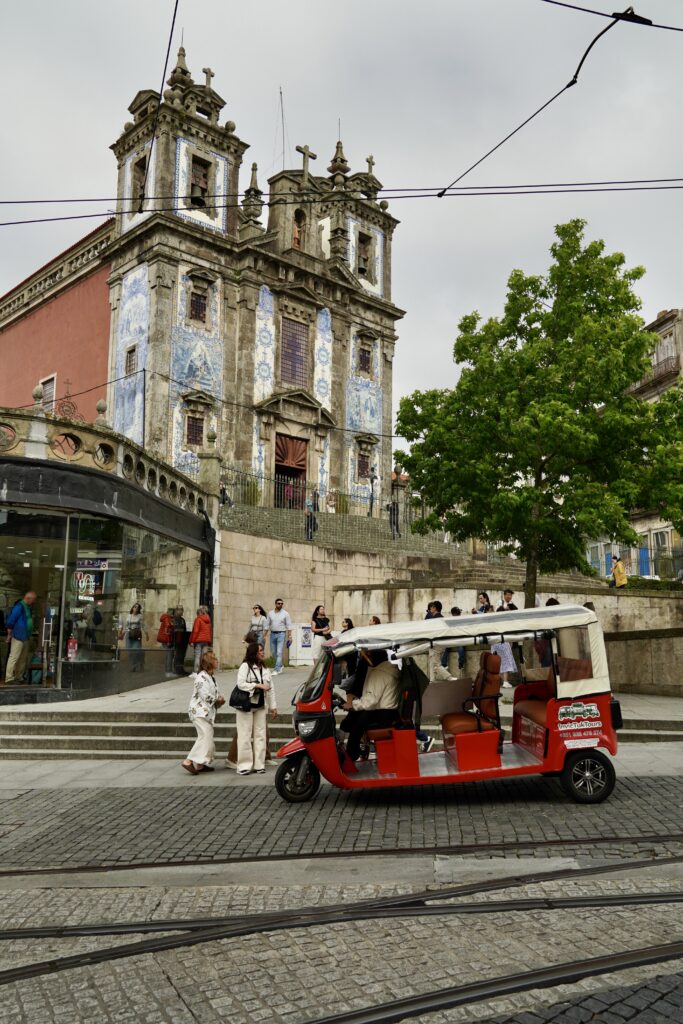
Yet another beautiful Porto church adorned with blue-and-white azulejo tiles, Igreja de Santo Ildefonso is hard to miss as you wander through the city center. We didn’t go inside this one, but I specifically loved the road leading up to it, which provides a clear sightline between Igreja de Santo Ildefonso and Clérigos Church in the distance.
Chapel of Souls (Capela de Santa Catarina)
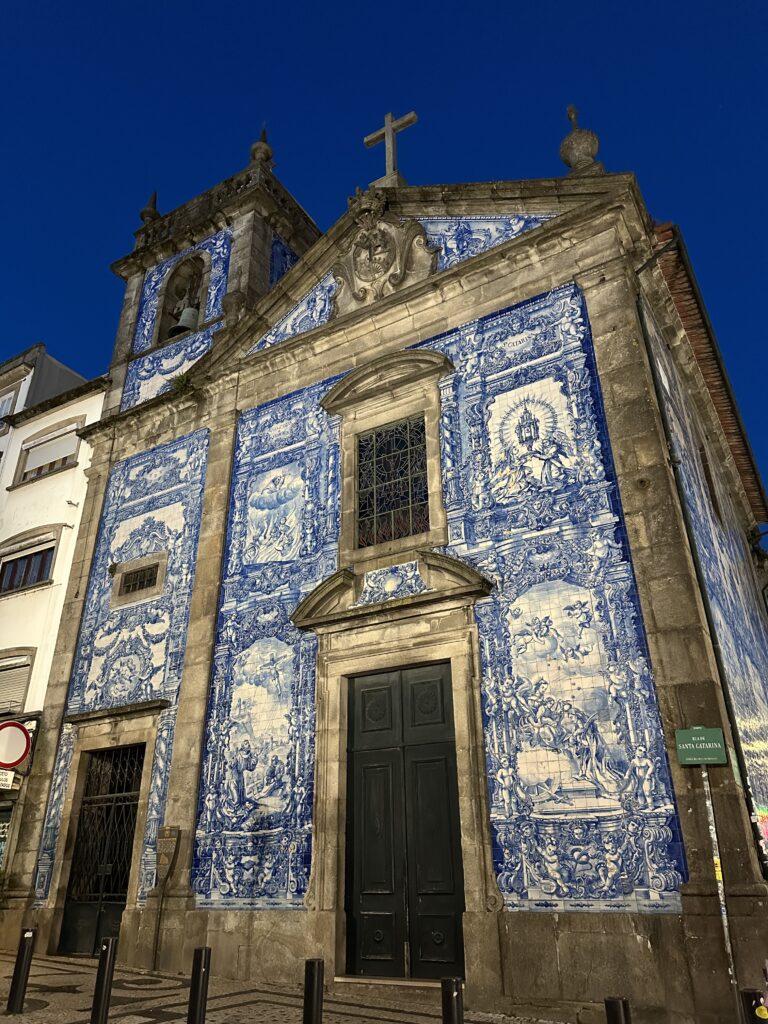
The Chapel of Souls is one of those places in Porto that looks almost too pretty to be real. Its entire exterior is yet another church, covered in vibrant blue-and-white azulejo tiles, depicting scenes from the lives of Saint Francis of Assisi and Saint Catherine. With more than 15,000 tiles covering the facade, it’s easily one of the most impressive examples of azulejos work in the city.
It’s completely free to enter. Even if you’re just walking by, take a moment to admire the intricate tilework and snap a few photos, the chapel is especially beautiful from across the street.
Helpful Maps Of Porto’s Best Attractions
Use this helpful map to see where all the best things to do in Porto, Portugal are located and plan your sightseeing route.
Where To Stay
For your first trip to Porto, we’d recommend staying somewhere in or near the historic center. Porto is very walkable, so being close to the main sights means you can spend less time worrying about transportation and more time wandering the colorful streets, grabbing a glass of Port, and finding your next favorite restaurant.
PortoBay Flores – Best for a Luxury Stay
Located right in the historic center, PortoBay Flores is a beautiful five-star hotel in a historic building with an indoor pool, spa, and elegant rooms.
Torel Palace Porto – Best Boutique Hotel
For something a little more unique, Torel Palace is a gorgeous boutique hotel with stylish rooms, an outdoor pool, and a great location for exploring Porto on foot.
Hotel Pão de Açúcar – Best Quirky Stay
This fun, retro hotel is packed with vintage memorabilia and has a rooftop terrace. It’s also right in the center, making it a convenient and affordable option.
Hotel Moov Porto Centro – Best Budget-Friendly Stay
If you’re looking to save money while staying central, Hotel Moov is a great choice. It’s housed in a converted Art Deco cinema and puts you within walking distance of many of Porto’s top attractions.
Tivoli Kopke Porto Gaia – Best for River Views
Don’t overlook staying across the river in Vila Nova de Gaia. Tivoli Kopke offers beautiful views of Porto, a pool and spa, and a unique location inside the historic Kopke Port wine cellar.
Use the map below to explore other great places to stay in Porto.
Watch Our Porto Video
Save This Post For Later